Choosing sofa upholstery fabric is more than matching a color to your living room. It affects comfort, cleaning, durability, indoor atmosphere, and long-term value. A pale linen may look refined beside natural wood, while a tightly woven performance textile may better withstand children, pets, and daily snacks. The best decision depends on real use, not showroom appearance alone.
Industry data supports this practical approach. Grand View Research reported that the global upholstered furniture market was valued at approximately USD 45.4 billion in 2023, with continued growth expected through 2030. This expansion reflects stronger interest in design, replacement furniture, and materials that perform better. However, market growth does not prove that every “performance” fabric is suitable. Marketing language can be vague. Check the specification sheet.
Professional testing offers clearer evidence. The Association for Contract Textiles recommends performance evaluation through methods such as double-rub abrasion, seam slippage, colorfastness, and cleaning tests. These measures help compare sofa upholstery under controlled conditions, although laboratory results cannot perfectly recreate a busy home. A high abrasion rating may not prevent staining, snagging, or fading near a sunny window. That is easy to overlook.
Before choosing, examine the fabric in daylight and touch its surface. Ask about fiber content, backing, cleaning codes, pilling resistance, and warranty limits. Consider a removable cushion cover, especially in high-use rooms. Keep pets in mind. Keep coffee spills in mind. A fabric can be beautiful and still be impractical. The most reliable choice balances verified performance with the way your household actually lives.
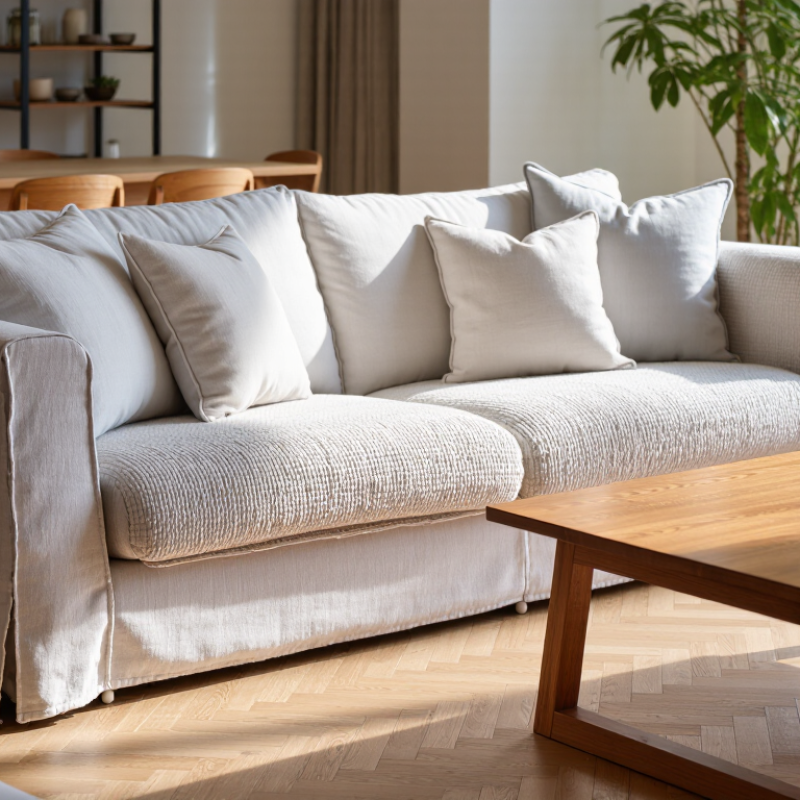
Cotton feels soft, breathable, and comfortable against bare skin. It suits relaxed living rooms, but it can wrinkle and absorb spills quickly. Linen offers a crisp texture and natural airflow. However, its fibers may crease easily, especially on frequently used cushions. Wool resists moisture and everyday wear better than many natural fabrics. It also provides warmth without feeling heavy.
Polyester is practical for busy homes because it resists fading, stretching, and some stains. Microfiber has a close, smooth surface that often handles dust and small spills well.
Velvet creates depth with its directional pile, yet it can show pressure marks when cushions move. A tightly woven fabric usually withstands daily friction better than a loose, decorative weave.
Check the manufacturer’s abrasion rating, cleaning code, and lightfastness information before ordering.
In my upholstery work, I have found that texture can matter as much as appearance. A fabric sample may look perfect under showroom lights but feel harsh beside a window. I once chose a pale linen blend for a low-use sofa, and the first coffee mark changed my opinion. That mistake still matters. Families with children or pets may prefer darker, tightly woven polyester blends. Homes with strong sunlight need fade-resistant fibers and lined windows. Test a large sample at home. Sit on it, rub it, and inspect the weave closely. A beautiful fabric can still be the wrong fabric.
How to Choose the Best Sofa Upholstery Fabric?
A sofa fabric should match real household habits, not an idealized room. Check the fabric’s abrasion rating, fiber blend, weave, and colorfastness before buying. Homes with children, pets, or frequent guests need stronger performance than formal sitting rooms. Tight, closely woven fabrics usually resist snagging better than loose textured ones. Every day matters.
Durability is only one part of the decision. A pale fabric may show fingerprints, crumbs, and denim transfer quickly. Dark fabric can reveal dust and pet hair just as clearly. Ask for a sample and place it near a window, dining table, and television seat. Sit on it with everyday clothing. Rub it gently with a clean cloth. My own fabric sample looked practical under showroom lighting, but sunlight exposed a warmer, less suitable tone at home.
Maintenance needs honest planning. Removable covers are useful, but washing can change texture or cause shrinkage if instructions are ignored. For fixed upholstery, vacuum weekly with a soft attachment and treat spills immediately by blotting. Never assume “stain-resistant” means stain-proof. This is where many choices fail. A fabric that demands constant caution may become frustrating, even if its technical rating is excellent. Before ordering, confirm cleaning codes, repair options, and whether replacement material may still be available later.
| Fabric Type | Typical Durability | Stain and Spill Resistance | Maintenance Needs | Best Everyday Use | Important Considerations |
|---|---|---|---|---|---|
| Performance Polyester | High; many tightly woven options are suitable for heavy residential use. Check the manufacturer’s abrasion rating. | Good, especially when solution-dyed or treated; spills should still be cleaned promptly. | Vacuum regularly and blot spills with a clean, damp cloth. Follow the upholstery cleaning code. | Busy family rooms, children, pets, and frequently used sofas. | Quality varies widely. Very smooth finishes may show pressure marks or develop static. |
| Microfiber | High; dense synthetic fibers resist abrasion and generally hold their shape well. | Very good for everyday spills because the dense surface slows absorption, although oil-based stains can be difficult. | Vacuum with a soft brush attachment; blot rather than rub. Some water-based cleaning may leave visible rings. | Homes with children, pets, and frequent casual use. | Can show directional shading or flattened nap after repeated sitting. |
| Leather | High when properly maintained; full-grain and top-grain leather can develop a patina over time. | Good resistance to many surface spills, but unsealed leather can absorb liquids quickly. | Dust and wipe regularly; use a suitable leather conditioner when recommended. Keep away from direct heat. | High-use living rooms, households wanting long service life, and homes without frequent fabric washing. | May scratch, fade, or show color variation. Temperature can affect comfort. |
| Cotton | Moderate; tightly woven cotton can be durable, but loose weaves may wear faster. | Low to moderate unless treated; cotton absorbs liquids and may stain. | Vacuum regularly and treat stains immediately. Removable covers may be machine-washable only if the care label permits. | Moderately used sofas, relaxed interiors, and households prioritizing natural fibers. | Can wrinkle, fade in strong sunlight, and shrink if cleaned incorrectly. |
| Linen | Moderate; strong fibers resist everyday wear, but the surface can crease and abrade depending on the weave. | Low to moderate; it absorbs moisture readily and is prone to visible marks. | Vacuum gently and address spills immediately. Professional cleaning may be preferable for fixed upholstery. | Light to moderate use, formal rooms, and well-ventilated spaces. | Natural slubs and wrinkles are normal; direct sunlight may cause fading. |
| Wool or Wool Blend | High; wool fibers are naturally resilient and recover well from compression. | Moderate to good; the surface can resist light spills, but liquid can penetrate if left untreated. | Vacuum regularly and blot spills. Use professional cleaning when required by the care label. | High-use seating where softness, resilience, and temperature regulation are valued. | May pill under friction and can be damaged by improper heat or moisture. |
| Velvet | Moderate to high depending on fiber, backing, and pile construction; commercial-grade velvet is generally more robust. | Moderate; liquid may bead briefly but can leave pile or pressure marks. | Vacuum with a soft attachment and gently brush the pile. Avoid aggressive rubbing and excessive moisture. | Moderate-use sofas, accent seating, and interiors where appearance is a priority. | Shows shading, crushing, and fingerprints more readily than flat-woven fabrics. |
| Chenille | Moderate to high; tightly constructed chenille can perform well, but raised yarns may snag or flatten. | Moderate; absorbency depends on fiber content and any protective treatment. | Vacuum gently and blot spills. Avoid pulling loose yarns or using harsh brushes. | Everyday family rooms when a soft, textured appearance is desired. | May develop nap variation and can be vulnerable to pet claws. |
| Olefin / Polypropylene | High for many outdoor and performance applications; resistance depends on construction and backing. | Very good against moisture and many water-based stains. | Easy vacuuming and spot cleaning; follow the recommended cleaning code and dry thoroughly. | Homes with children or pets, sunrooms, covered outdoor seating, and high-spill areas. | Can be affected by high heat and may show crushing or wear in heavily trafficked areas. |
| Acrylic | Moderate to high; commonly used where resistance to sunlight and moisture is important. | Good against moisture, particularly in solution-dyed outdoor fabrics. | Brush off loose dirt, spot clean promptly, and allow the fabric to dry completely. | Sunrooms, covered patios, bright rooms, and casual seating. | Some acrylic fabrics can pill, feel less natural, or become brittle after prolonged exposure to harsh conditions. |
Comfort starts with the first five minutes of sitting. Choose a fabric that feels pleasant against bare arms, not only attractive in a showroom. A tight weave usually feels smoother, while boucle and chenille create warmer, deeper texture. Test samples under daylight and evening lamps. Colors change dramatically.
Daily use demands evidence, not guesswork. The European Environment Agency reported that Europeans consumed about 14.8 kilograms of textiles per person in 2020. Durable upholstery can reduce replacement pressure. Ask for abrasion results using the ISO 12947 Martindale method. For busy family rooms, higher cycle ratings generally offer better resistance. However, abrasion is not the whole story. Sharp pet claws, zippers, and rough denim can still damage fabric.
Match color with the room’s fixed elements, including flooring, curtains, and wall paint. Soft gray can calm a bright room, but it may look dull beside cool lighting. Earthy beige works beautifully with wood, though it can disappear against pale floors. Interior designers often use one quiet base and add contrast through cushions. My own mistake was choosing texture from a small sample. The full sofa looked heavier than expected. Order a larger swatch, then leave it in the room for two days. Consider seams, sunlight, cleaning habits, and the sofa’s visual weight before deciding.
Comparing comfort, texture, color flexibility, durability, and interior design versatility on a typical 1–10 scale.
Cotton and linen offer a cool, natural feel; velvet provides rich texture; wool balances comfort and durability; microfiber is practical and easy to maintain; leather is durable and highly versatile but may feel less soft initially. Ratings represent commonly observed upholstery characteristics and vary by weave, finish, and construction.
Fabric safety deserves more attention than softness. The U.S. Environmental Protection Agency reports that indoor pollutant levels can be two to five times higher than outdoor levels. Request test documents for restricted substances, colorfastness, abrasion, and chemical finishes. Ask whether stain resistance uses intentionally added PFAS. Fire performance also depends on local requirements and sofa construction. A vague “non-toxic” claim is not enough. It sounds reassuring, but it proves little.
Environmental impact begins with material choice and service life. The European Environment Agency reported that EU textile consumption reached 14.8 kilograms per person in 2020, while textile waste reached about 6.95 kilograms. Upholstery is only part of that stream, yet the scale is difficult to ignore. Prefer durable fabrics with recycled content, transparent fiber information, and replaceable covers. The U.S. EPA recorded about 12.1 million tons of furniture and furnishings entering municipal waste in 2018. Recycling remains limited. A recycled label cannot repair poor durability.
Budget calculations should include fabric, labor, cleaning, and cutting waste. Measure the sofa carefully, then allow roughly 10 to 15 percent extra fabric. Check abrasion results under ASTM or Martindale methods, but do not treat one number as a universal promise. A high score may still feel unpleasant or fade beside a sunny window. I would rather choose a moderately priced fabric that can be cleaned and repaired. My own judgment may still be imperfect. Real homes are messier than showroom tests.
Choosing upholstery fabric starts with the room’s real habits, not a showroom photograph. Measure sunlight, traffic, pets, children, and cleaning routines. A pale textured weave can look calm, yet trap crumbs and show denim transfer. For a busy sofa, tightly woven polyester, performance linen blends, or treated cotton may offer practical resistance. Natural fibers feel warm, but they can fade or wrinkle. That is not always a fault. It is a design choice. Feel the sample against your skin. Then inspect its backing, seam stability, and surface recovery after pressing.
Never trust a small swatch alone. Place several candidates on the sofa for two days, including morning sunlight and evening lamp light. Sit on them in ordinary clothes. Test it twice. Rub the fabric with a clean white cloth to check for loose dye. Add a few drops of water, wait, and blot instead of scrubbing. Watch for rings, fuzzing, or color change. Ask the supplier for abrasion, pilling, lightfastness, and cleaning data. These tests help, but ratings cannot predict every household. A fabric may pass laboratory testing yet feel hot, slippery, or noisy.
I once favored a tightly woven fabric because it resisted stains. After a week, its stiff surface felt uncomfortable. I had tested durability, but not daily comfort. I was wrong. Open the sample, bend it around a corner, and examine the underside. Check the pattern scale before ordering. A beautiful repeat can look awkward across cushions. Also confirm whether the cleaning method matches your patience and available tools. Comfort matters, too.