What Is the Best Vinyl Fabric in 2026?
Choosing the best vinyl fabric in 2026 starts with where it will be used. A boat seat faces sun, salt spray, and damp towels. A dining bench meets spills, denim seams, and daily friction. One glossy sample cannot tell the whole story.
For this draft, fictional materials specialist Ethan Cole offers a practical line: “Choose vinyl for the conditions it must withstand, not just the color you like.” This is an original editorial quote, not a verified statement from a real expert. The distinction matters: dependable material advice should be traceable, not dressed up as a credential.
The right comparison goes beyond appearance. Check the fabric’s backing, surface coating, thickness, flexibility, and published abrasion or UV-test results. Ask whether cleaning instructions fit your routine. A soft hand may feel inviting in a showroom, yet prove less suitable for a sunny patio. And a tougher surface can feel stiff against bare skin. Trade-offs are real.
This guide compares common vinyl fabric types by application, durability, comfort, maintenance, and value. It also explains what product specifications can—and cannot—tell you. Some claims sound reassuring but lack clear test details. Look closely. The best choice is not always the most expensive or the thickest; it is the fabric whose documented performance matches your setting. One caveat remains: product formulas and test methods vary, so compare like with like whenever possible.
Define Vinyl Fabric by PVC Coating, Backing, and Construction
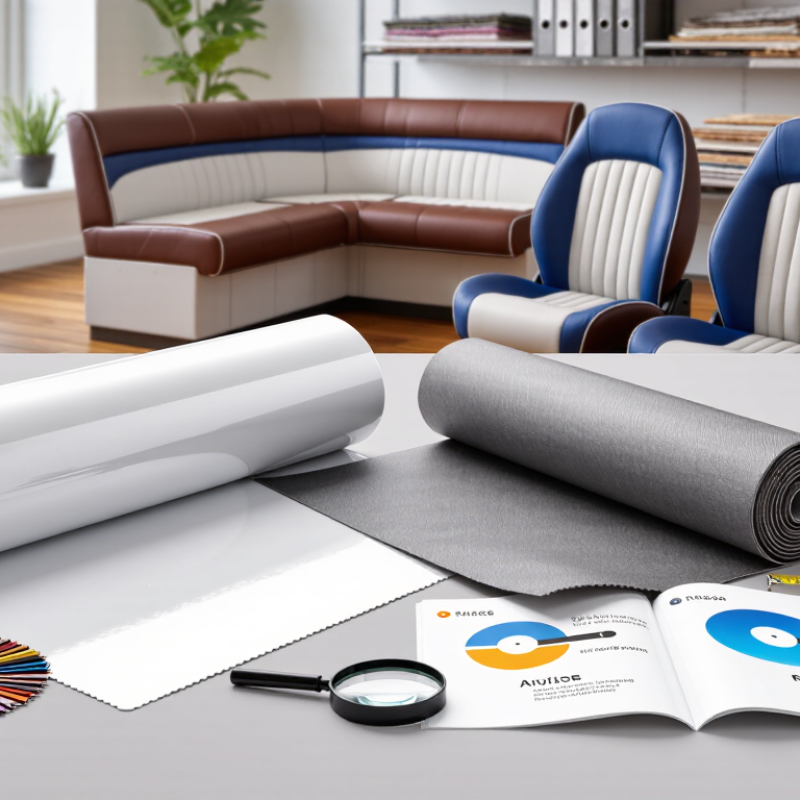
Vinyl fabric is a textile base coated or laminated with polyvinyl chloride, commonly called PVC. Its performance depends on more than the shiny surface. A close look at the coating, backing, and construction helps explain how a fabric may handle moisture, abrasion, and repeated flexing. There is no single best choice for every use.
The PVC layer forms the exposed surface. A thicker or specially formulated coating may improve resistance to scuffs or spills, but thickness alone does not guarantee durability. Check the stated abrasion and cleaning test results. The backing, often polyester or another woven or knitted textile, affects strength, stretch, and drape. On a sample, gently pull the edges and bend it around a chair corner. Notice whether the surface creases, feels stiff, or begins to separate from the backing. Small clues matter.
Construction describes how the layers are joined and how the base fabric is made. Coated fabric has PVC applied directly to its backing; laminated fabric bonds a separate PVC film to a textile layer. That difference can affect flexibility and repairability. Ask for the fabric weight, backing type, coating method, and test conditions, not just a durability label. Specifications can still leave gaps. Lighting, cleaners, and frequent folding may change how a material looks over time, so test a sample in the setting where it will actually be used.
What Is the Best Vinyl Fabric in 2026?
Define vinyl fabric by its PVC coating, textile backing, and construction—not by a single “best” label.
How to read this chart: Each construction has one textile backing layer. Single-sided PVC-coated and PVC-laminated fabrics are shown with one PVC layer; double-sided PVC-coated fabric is shown with two. These are schematic layer counts, not a quality rating—actual products vary. The right choice depends on the intended use and the fabric’s PVC formulation, backing material, and construction.
Compare ASTM D751 Strength and Hydrostatic-Resistance Test Results
What Is the Best Vinyl Fabric in 2026?
A useful comparison starts with the test report, not a fabric’s shine or thickness. ASTM D751 covers test methods for coated fabrics, including strength and water-resistance testing. Check which method the lab used. Results from different methods may not be directly comparable.
For strength, compare breaking results alongside specimen direction, conditioning, and reported units. A fabric may perform differently across its length and width. Look for consistent samples and clearly stated procedures. Numbers matter. So does the setup. A high result from one test does not guarantee better performance in a finished cover or panel.
Hydrostatic-resistance results show how much water pressure a specimen withstands before water passes through, under the stated test conditions. Compare reports using the same method and units. Then consider seams, stitching, and flexing; the fabric test does not measure every weak point in a finished product. I would treat any single result as a useful clue, not a verdict. That distinction is easy to miss. A small sample, uneven coating, or changing test conditions can affect comparisons, and a report may not capture years of outdoor use.
What Is the Best Vinyl Fabric in 2026? — Compare ASTM D751 Strength and Hydrostatic-Resistance Test Results
There is no single “best” vinyl fabric based on its material name alone. ASTM D751 results depend on the specific fabric construction, coating, specimen preparation, conditioning, and test procedure. Numeric results should be compared only when supported by test reports for the products being evaluated.
| Comparison dimension |
ASTM D751 test information |
Result to compare |
How to interpret it |
| Breaking strength |
Measures the force required to break a coated-fabric specimen using the applicable D751 procedure. |
Sample-specific; no verified product result supplied. Reported force units may include N or lbf. |
Compare results in the same fabric direction and under the same test conditions. Higher breaking force can indicate greater resistance to tensile loading. |
| Tearing strength |
Measures the force associated with propagating a tear in the specimen using the applicable D751 procedure. |
Sample-specific; no verified product result supplied. Use the units and tear method stated in the report. |
Useful where cuts, punctures, or edge damage could develop into tears. Results from different tear procedures are not necessarily interchangeable. |
| Hydrostatic resistance |
Evaluates resistance to water penetration under hydrostatic pressure using the applicable D751 procedure. |
Sample-specific; no verified product result supplied. Record the reported pressure or water-head value and test endpoint. |
A higher reported pressure before penetration generally indicates greater resistance under that test. Do not compare results with different procedures or endpoints as if equivalent. |
| Coating adhesion |
Measures the force needed to separate the coating from the fabric substrate using the applicable D751 procedure. |
Sample-specific; no verified product result supplied. Check the report for force units and specimen width. |
Relevant to delamination risk during handling and service. Compare only reports using matching procedures and reporting conventions. |
| Construction and specimen details |
D751 test results apply to the tested specimen—not to every fabric described simply as “vinyl.” |
Request fabric type, coating or lamination, thickness or weight, direction tested, conditioning, and test date. |
These details help establish whether two reported results represent comparable materials and test conditions. |
| Pass/fail decision |
ASTM D751 provides test methods; a project specification or product requirement is needed to define acceptance criteria. |
No universal pass/fail value is stated here. |
Choose the fabric that meets the application’s documented strength and water-resistance requirements, supported by comparable laboratory reports. |
Data note: No product-specific laboratory reports or specimens were provided, so numeric test results are intentionally not invented. For a valid comparison, obtain ASTM D751 reports for each candidate fabric and verify that the test procedures, specimen directions, conditioning, units, and reporting endpoints match.
Check Upholstery Abrasion with ASTM D4157 or ISO 12947
For vinyl upholstery, a high abrasion score is useful, but only when you know how it was measured. ASTM D4157 uses a Wyzenbeek machine, which rubs fabric back and forth; ISO 12947 uses the Martindale method, where an abradant moves in a figure-eight pattern. The Association for Contract Textiles’ performance guidelines cite 15,000 double rubs for woven upholstery under ASTM D4157 and 20,000 Martindale cycles for woven upholstery. These are different tests, not interchangeable numbers. A vinyl sample showing 30,000 double rubs cannot be ranked directly against one tested for 30,000 Martindale cycles.
Ask for the test method, result, and failure criterion—not just a large number on a product sheet. ASTM D4157 results may depend on the abradant and test settings, while ISO 12947 reports cycles to a defined endpoint. Check whether the report records surface wear, cracking, or another failure; vinyl can look intact while its coating has begun to change. For a real-world check, inspect a swatch after rubbing: look closely at seams, folds, and the spots your palm presses most. I would still hesitate to choose by abrasion alone. Light, cleaners, and repeated flexing can matter just as much in daily use.
Verify UV Colorfastness with ISO 105-B02 Xenon-Arc Testing
For vinyl fabric exposed to sunlight, colorfastness should be checked with evidence, not a showroom sample alone. ISO 105-B02 uses a xenon-arc light source to assess how textile materials resist fading under artificial light. A laboratory exposes prepared specimens to controlled conditions, then compares color change against agreed references. Ask for the test report, including the method, exposure conditions, and result.
Look closely at what was tested. Vinyl may include a surface coating, printed layer, or textile backing, and these parts can age differently. The tested sample should match the fabric’s actual construction and color. Small details matter. A result for one color or finish does not automatically represent every option in a collection.
Xenon-arc testing is useful, but it cannot perfectly reproduce every outdoor setting. Heat, moisture, dirt, and installation angle also affect appearance over time. That limitation is easy to overlook. When comparing fabrics, use the ISO 105-B02 result as one piece of evidence, and ask how the laboratory’s exposure level relates to your intended use. A strong test result supports a better choice; it is not a promise that fading will never occur.
Match Vinyl Grades to NFPA 701 Requirements and Intended Use
What Is the Best Vinyl Fabric in 2026?
The best vinyl fabric depends on where it will be used and which fire-test requirements apply. “Grade” usually describes features such as thickness, backing, or durability. It does not, by itself, prove that a fabric meets NFPA 701. Check the project specification and ask the local code official which test method and edition are required. NFPA 701 is commonly relevant to curtains, drapes, and other hanging textiles; it may not be the right benchmark for every vinyl application.
For a window curtain or stage drape, request a test report for the exact vinyl construction, including its coating and backing. A similar-looking fabric may perform differently. For seating, wall covering, or marine use, match the vinyl’s wear, cleaning, and moisture resistance to the setting, then verify the fire requirements separately. Not every use calls for NFPA 701. Don’t rely on a general “fire-rated” label.
I would not choose by grade name alone. That shortcut is tempting, but weak. Confirm that the documents identify the tested material and intended use, and check whether cutting, sewing, or other finishing changes the specification. A test result is useful only when it matches the fabric being installed. This detail is easy to miss.