How to Choose Upholstery Fabric in Canada in 2026?
Choosing upholstery fabric in Canada in 2026 means balancing comfort, durability, care, and the room’s real conditions. Start with the room. A pale linen blend may feel cool and relaxed, but a sunny window, muddy boots, or a cat’s claws can change how it performs. Ask for the fiber content, cleaning code, and abrasion-test details before ordering. Then compare the swatch in your own light. Not just the showroom light.
Industry data helps explain why fiber content matters. Textile Exchange’s Materials Market Report 2024 estimated global fiber production at about 124 million tonnes in 2023, with polyester accounting for roughly 57%. That figure is not an upholstery-only measure, but it shows how widely synthetic fibers are used. For performance fabrics, the Association for Contract Textiles’ guidance encourages buyers to consider tests such as abrasion, colorfastness, and seam slippage—not one number alone. Textile designer and manufacturer William Morris offered a useful design principle: “Have nothing in your houses that you do not know to be useful, or believe to be beautiful.” Apply that thought to upholstery fabric canada: choose a material that suits your household, not just your mood on sample day. A fabric can look perfect in a small swatch and feel wrong across an entire sofa. That trade-off is easy to miss. And honestly, no test can predict every spill, pet, or patch of afternoon sun.
Identify the Furniture’s Use, Location, and Budget
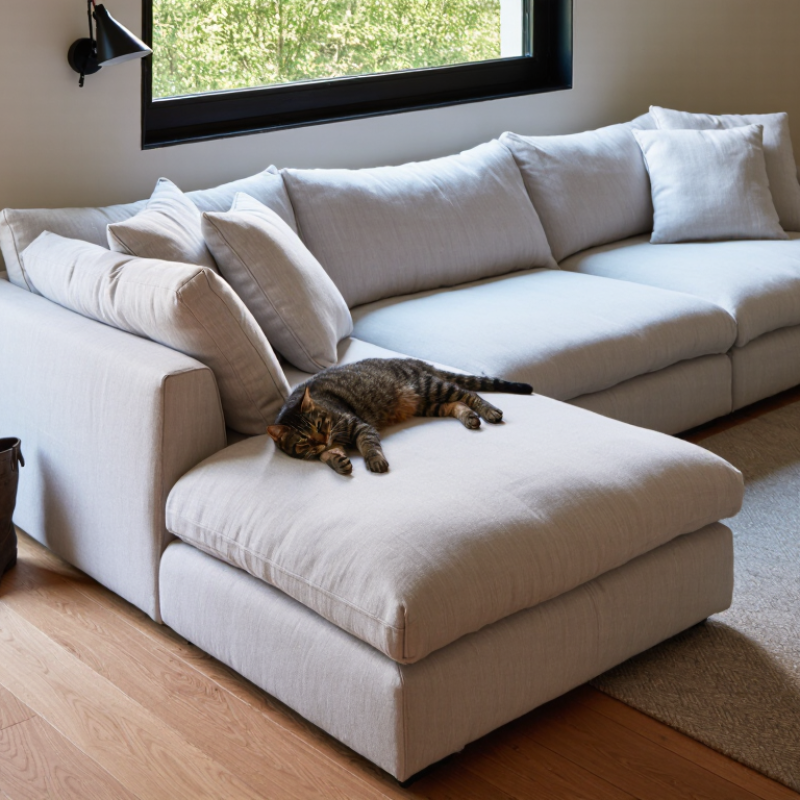
Before choosing a fabric, decide how the furniture will be used. A living-room sofa that holds up to children, pets, and daily lounging needs different protection than a rarely used reading chair. Look for a tightly woven, durable fabric on high-traffic pieces; loose loops can snag on claws or rough clothing. For dining chairs, consider how easily the surface releases spills. Small samples help, but they can make texture feel more obvious than it will across a whole sofa.
Location matters in Canada. A sunlit condo near a large south-facing window may fade some colours faster, while winter heating can make indoor air very dry. In an entryway, wet coats and gritty boots may brush against a bench, so choose a fabric that is practical to clean. For a cottage or seasonal home, think about humidity and how often the room is used. Check the care instructions before buying. “Easy-care” can still mean careful spot cleaning.
Set a budget for more than the fabric itself. Ask whether the quote includes labour, new cushions, delivery, and removal of the old covering. A lower-cost fabric may be sensible for a guest-room chair, but less so for the sofa used every evening. Compare durability details and cleaning needs, not just colour and price. I might still choose the softer option and regret the upkeep; comfort is persuasive. Test it in your own light.
Compare Upholstery Fibers, Weaves, and Fabric Constructions
Choosing upholstery fabric in Canada in 2026 starts with matching fiber to daily use, not color alone. Polyester blends often resist fading and dry faster after a damp winter coat brushes the seat. Wool feels warm and handles wear well, but may cost more and need careful cleaning. Cotton feels breathable; spills can leave marks. No option is perfect.
Weave affects both feel and durability. A tight plain weave suits busy family seating, while velvet’s raised pile can show pressure marks when brushed the wrong way. Basket weaves add texture, but loose loops may catch on pets’ claws. Check the fabric’s backing and seams, too. A sturdy fiber can still sag if its construction is weak. Touch a sample, bend it, and inspect it in daylight. I would not judge from a small swatch alone; it can hide how a pattern shifts across a sofa.
Tips: Ask for cleaning guidance and rub-test results, then compare samples against your room’s light. Keep one near a window for a few days. Notice lint, fading, or snags. Small flaws matter. A fabric that looks good but feels scratchy may stay unused.
Evaluate Durability, Comfort, Cleanability, and Safety
In a Canadian home, durability means more than a high abrasion score. The Association for Contract Textiles’ performance guidelines use 30,000 Wyzenbeek double rubs as a heavy-duty benchmark for woven upholstery. Treat it as a comparison point, not a lifespan guarantee; construction, pets, sunlight, and daily friction matter too. Test a fabric sample on your actual sofa. Rub it, sit on it, and check how its colour looks beside the window.
Comfort is personal, but it can be assessed in practical ways. Sit for several minutes: does the fabric feel clammy, scratchy, or too warm? Tightly woven polyester blends often resist wear, while linen can feel cool but wrinkle more readily. There is a trade-off. I would not choose by touch alone; cushion fill and room temperature change the experience.
For cleanability, request the maker’s care instructions and ask whether stains can be spot-cleaned without fading or water marks. AATCC TM 130 measures soil-release performance, so test results can help compare fabrics, though they do not guarantee easy home cleaning. For safety, ask for documentation relevant to the fabric’s intended use and applicable Canadian textile-flammability requirements. “Easy-care” is vague. Get the test details.
Match Fabric Choices to Canadian Climate and Household Needs
How to Choose Upholstery Fabric in Canada in 2026?
Match Fabric Choices to Canadian Climate and Household Needs
Canada’s climate changes sharply by region, so a fabric that suits a dry prairie home may struggle in a damp coastal room. In humid spaces, look for tightly woven upholstery and follow care instructions that discourage lingering moisture. Air the room after cleaning. In dry winter interiors, fabrics can build static, while frequent heating may make some fibres feel less comfortable. A swatch helps reveal more than a catalogue photo. Check it beside a sunny window and under evening lights.
Daily use matters just as much as weather. For children, pets, or busy family rooms, consider durable, tightly woven polyester blends that are easier to clean. Check the fabric’s care label before buying; “easy-care” does not mean stain-proof. For a quieter sitting room, linen or cotton can feel breathable and relaxed, but they may wrinkle or show marks sooner. Wool blends can feel warm, though their cleaning needs vary. Test it first.
Think about where people sit most. A pale fabric may look calm in the showroom, then show muddy paw prints near the door. Ask for a sample and live with it for several days. Rub it gently, inspect the weave, and check whether the colour shifts in daylight. I would not choose by durability ratings alone; how a fabric feels and cleans in your household can matter more. Cleaning routines differ, too, so confirm that your usual method suits the textile.
Order Samples and Verify Care, Warranty, and Supplier Details
When choosing upholstery fabric in Canada in 2026, order samples before committing. Colours can shift under cool winter daylight or warm evening lamps. Place each swatch beside your flooring and curtains, then live with it for several days. Touch it with clean hands. Check whether the weave snags, feels clammy, or shows marks easily. A tiny sample cannot reveal everything, but it can expose a poor match early.
Read the care instructions and warranty before ordering. Confirm whether the fabric needs professional cleaning, and ask how spills should be handled at home. “Easy care” can mean different things. Request the warranty terms in writing, including exclusions for fading, abrasion, stains, or household use. Ask the supplier about stock, delivery estimates, and whether future orders can match the same colour lot. Keep the product details and care sheet with your receipt. Rub-test figures may help compare options, but they do not predict every home’s wear. I’d be cautious about choosing by a number alone; pets, sunlight, and daily habits matter too. A little extra checking can prevent an expensive regret.