
A Square Cooler Bag can look simple on a product sheet: four sides, a zipper, and an insulated lining. Bulk buying is less simple. Small differences in capacity, stitching, or handle construction can affect storage, comfort, and repeat orders. A bag that holds lunch for one person may not suit a promotional kit or a family outing. Details matter.
This guide covers ten practical checks for buyers comparing suppliers and samples. It looks at usable dimensions, insulation, outer fabric, lining, seams, closures, carrying options, leak resistance, customization, and total cost. Ask for product specifications, but examine a physical sample when possible. Feel the fabric. Open and close the zipper several times. Check whether the handles pull against reinforced seams. These simple checks reveal things a polished photo may not.
Bulk orders also depend on clear communication. Confirm color consistency, logo placement, packaging, and production timelines before approving quantities. Request written details, and keep the approved sample for comparison. Even then, results can vary between production runs; no checklist removes every risk. That is worth remembering. A low unit price may be attractive, yet a weak zipper or awkward shape can create complaints later. The right choice depends on who will use the bag, what it must carry, and how often. The following tips help buyers ask better questions and make a more informed decision—not just choose the cheapest quote.
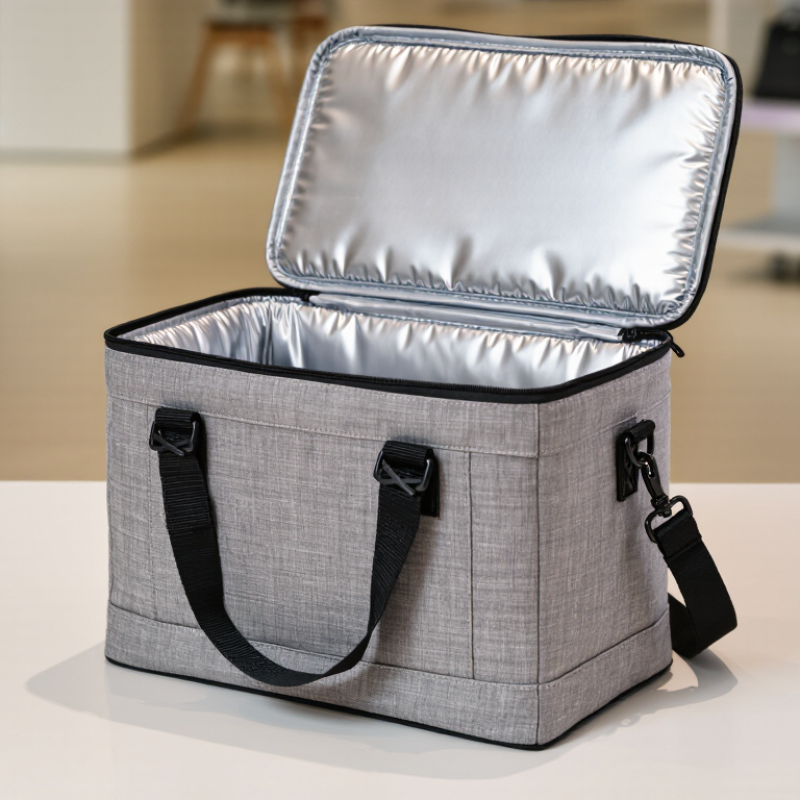
Before requesting quotes, define what each square cooler bag must carry. List the usual contents, not just the maximum load: six lunch containers, two drink bottles, or chilled samples in sealed tubs. Measure the tallest item and the shelf or vehicle space available. A roomy sample can still block a narrow storage rack. Check how long items need to stay cool, where bags will be stored, and who will carry them.
Tip: Map one real workday. Note the route, handoffs, storage breaks, and likely spills. A delivery crew may need easy-clean lining and sturdy handles. Event staff may value quick access and consistent capacity. If users walk several blocks, weight and shoulder comfort matter more than extra pockets. Ask a few intended users to handle a sample; their feedback may challenge your first assumptions.
Set bulk-order requirements before comparing suppliers. Record target quantity, acceptable dimensions, color needs, packing method, and delivery schedule. Confirm whether bags must fit together in cartons or stack in a storage room. Request measurements and material details in writing, then inspect a sample with the actual containers inside. Test before scaling. One thing is easy to overlook: planned capacity may not match real packing habits, so leave a little room and review the trial carefully.
For bulk buyers, compare the outer fabric and insulation as a working pair. A polyester shell is often practical for repeated handling, while a coated surface can make spills easier to wipe away. Check seams, zipper stitching, and corner reinforcement; square bags can bulge at the corners when packed tightly. Material labels alone tell only part of the story.
Tip: Ask for samples from the production run. Place a chilled bottle and a small ice pack inside, then check temperature after a few hours. Compare bags under the same conditions. This is not a laboratory test, but it can reveal weak seams, awkward lids, or insulation that compresses too easily.
Foam thickness matters, yet thicker insulation may reduce usable capacity and make the bag heavier. Closed-cell foam can resist moisture better than some open-cell options, but performance depends on construction and sealing. Look for insulation that covers the base, lid, and side panels without obvious gaps. Small details matter. A tidy sample may not represent every unit in a large order, so request written specifications and inspect a few bags from the delivered batch. The best choice balances cooling needs, carrying comfort, durability, and the space your buyers actually require.
Typical thermal conductivity of common foam insulations (W/m·K). Lower values generally indicate better insulating performance.
Bars show approximate midpoints of typical reported ranges: polyurethane (0.020–0.028), expanded polystyrene (0.030–0.040), cross-linked polyethylene (0.030–0.040), and expanded polyethylene (0.035–0.045 W/m·K). Actual performance varies by formulation and temperature; a finished cooler bag’s seams, lining, closures, and construction also affect heat retention.
Sizing & capacity
A square cooler bag can look roomy on a product sheet and still feel cramped in use. Check its internal dimensions and stated capacity, then test it with the items customers are likely to carry. A 10-inch opening, for example, may fit lunch boxes but frustrate users with wide containers. Leave space for an ice pack. It takes room.
Practical details
Compare practical features, not just the fabric description. A wipe-clean lining, reinforced handles, and smooth zipper can matter more than extra pockets. Ask how seams are finished and whether the lining is tested for leaks. If bags will be carried daily, inspect a filled sample; lifting an empty bag tells you very little. Keep a sample for reference. Bulk orders can reveal small differences in stitching or color that were easy to miss.
Customization & fit
Customization should support the bag’s use and your budget. Request a digital proof showing logo size and placement, then review a physical sample when color accuracy matters. Ask about available fabric colors, print methods, setup fees, minimum quantities, and production timelines. A large logo may seem bold on screen, but crowd a small front panel in person. I would reconsider it after seeing the sample. Check that handles remain comfortable when the customized bag is fully loaded.
For a bulk order of 10-square cooler bags, supplier reliability matters as much as the sample’s appearance. Ask for a recent production sample and compare its stitching, zipper movement, insulation thickness, and printed dimensions with the written specifications. Request references from buyers with similar order sizes. A polished sample is useful, but it cannot prove every production unit will match. If possible, agree on a pre-shipment inspection and clear standards for acceptable defects.
Compare quotes line by line. Check whether the price includes printing, packaging, sample fees, and delivery to your destination. A low unit price can hide setup charges or a thinner lining than you expected. Ask how costs change at different quantities, and get the currency and payment schedule in writing. Small differences add up. I have seen buyers focus too much on the quoted price and overlook carton size, which can affect freight costs.
Tips: Confirm lead times in writing, including sample approval, production, and shipping. Ask for a realistic completion date, not just the fastest estimate. Build in a buffer for artwork changes or material delays; even reliable suppliers can face them. Send final artwork and bag dimensions together, then request a dated production schedule. Check in at agreed milestones. A weekly update may feel excessive for a small order, but silence near the ship date is worse.
Before ordering 10-square cooler bags in bulk, request a production sample and the written material specification. Check fabric weight, lining thickness, zipper alignment, handle stitching, and seam finish. Pull each handle firmly, then load the bag with chilled packs and repeat the test. Small defects multiply across a large shipment. Numbers need context. Ask suppliers for insulation-test results that state ambient temperature, load, test duration, and measurement location; a single “hours cold” claim is difficult to compare without these details. Request relevant food-contact documentation for the lining and clear batch traceability.
Set acceptance criteria before approving the order, not after cartons arrive. The FDA Food Code (2022) uses 41°F (5°C) as the maximum cold-holding temperature for time/temperature-controlled foods. USDA Food Safety and Inspection Service guidance says perishables should not sit above 40°F for over two hours, or one hour when temperatures exceed 90°F. These figures are handling benchmarks, not proof that a cooler bag alone keeps food safe. Test a filled sample with a calibrated thermometer under realistic conditions, including repeated opening. Record the starting temperature and readings over time. One detail buyers sometimes miss: an empty-bag test may look excellent, while a packed bag with a weak zipper leaks cold air. Ask for corrective-action records when tests fail; a polished certificate is not a substitute for consistent production.
Use this checklist to compare samples, agree on measurable specifications, and document inspection requirements before approving a bulk order.
| No. | Buying Tip | What to Verify | Example Purchase Criteria | Evidence to Request |
|---|---|---|---|---|
| 1 | Confirm finished dimensions and capacity | Measure the assembled bag, including the base, opening, and usable interior. Check that the square shape remains stable when loaded. | Write down target external dimensions, permitted tolerances, and usable capacity in litres. For example, agree on a tolerance of ±1 cm if appropriate for the design. | Approved technical drawing; pre-production sample measurement report; photos showing measurement points. |
| 2 | Check fabric and insulation construction | Confirm the outer fabric, inner liner, insulation type, material thickness, and how the layers are joined. Inspect seams and corners for gaps or loose stitching. | Specify material composition, nominal thickness or weight, and required seam construction. Compare bulk production materials with the approved sample. | Material specification sheet; cut-section sample; incoming-material inspection records. |
| 3 | Assess insulation performance | Test the complete bag under consistent conditions, including the same fill, starting temperature, ambient temperature, and test duration. | Set a buyer-defined temperature-retention target and test protocol. Treat results as design-specific; performance varies with fill level, opening frequency, and surroundings. | Test report stating the method, sample configuration, temperatures, duration, and results. Request repeat testing when construction changes. |
| 4 | Inspect liner seams and leak resistance | Check the liner for pinholes, incomplete welds or seams, and leakage around corners and the base. Confirm whether the bag is intended to contain loose liquids. | Agree on a practical water-leak test and inspection duration. Do not assume every insulated bag is leakproof unless that requirement is specified and tested. | Written test procedure; test results from production-representative samples; clear product-use and care instructions. |
| 5 | Test handles, straps, and attachment points | Examine stitching, reinforcement patches, webbing, and stress points. Load the bag evenly and check for tearing, slipping, or uncomfortable handle separation. | Set a maximum carrying load and hold duration based on intended use. Define whether the test includes repeated lifting and loaded carrying. | Load-test records; close-up inspection photos; confirmation that handle placement matches the approved sample. |
| 6 | Check zipper operation and durability | Open and close the zipper along the full track. Look for snagging, uneven teeth, weak end stops, and separation at curved or reinforced sections. | Agree on a cycle count for a buyer-defined opening-and-closing test, then inspect for broken components or loss of function. | Sample test log; zipper and slider specifications; record of any repairs or failures during testing. |
| 7 | Review colorfastness and surface quality | Check for color transfer, uneven dyeing, coating cracks, stains, and visible defects. Consider the bag's expected exposure to moisture, handling, and sunlight. | Specify acceptable appearance and any required colorfastness tests. ISO 105-X12 is a test method for color fastness to rubbing; agree on the applicable procedure and rating requirements. | Color approval sample; test report identifying the method and result; documented defect limits for bulk inspection. |
| 8 | Verify applicable chemical and product-safety requirements | Identify destination markets and whether the liner may contact unpackaged food. Requirements depend on the materials, intended use, and jurisdiction. | For EU sales, review applicable REACH restrictions. For US food-contact applications, assess relevant FDA requirements for the specific materials and conditions of use. Do not treat either as a universal certification. | Material declarations and relevant test reports from a qualified laboratory; written confirmation of intended use and destination-market compliance. |
| 9 | Set a clear inspection and defect-sampling plan | Define critical, major, and minor defects; the inspection stage; sample selection; and who may approve or reject the lot. | Consider an agreed sampling plan based on ISO 2859-1. State the inspection level and acceptance limits in the purchase agreement; the standard does not prescribe one universal AQL for every order. | Signed inspection criteria; pre-shipment inspection report; defect photographs and lot-identification records. |
| 10 | Approve a production-matched sample | Compare materials, dimensions, color, stitching, accessories, packaging, and labeling against the final approved reference sample. | Require written approval before mass production and written approval for any later material or construction change. Define packaging and carton markings in the order. | Signed sample approval; final specification sheet; change-control record; pre-shipment photos or inspection report. |
Note: Example tolerances and test criteria should be agreed between buyer and supplier before production. They are purchasing specifications, not universal regulatory limits or guarantees of product performance.