
7 Tips for Buying Kids Stools in Bulk

Buying a Kids Stool in bulk can simplify furnishing a classroom, daycare, playroom, or children’s activity space. Yet a low unit price does not guarantee a good purchase. A stool that rocks on a smooth floor or is difficult to wipe clean may create daily frustration. Small details matter.

Start with the children who will use the stools. Compare seat height with their tables, check the stated weight capacity, and look for stable legs and smooth edges. Ask suppliers for clear product specifications rather than relying on photos alone. A sample can reveal details a product page misses. It may also expose a color or finish that looks different in person.

For larger orders, consider material, cleaning needs, available storage, delivery timing, and replacement options. Stackable designs can save space, but only if they remain stable when stacked and are easy for staff to move. Check whether the quoted price includes shipping, and confirm how shortages or damaged items are handled. These questions can feel fussy. They are often cheaper than fixing a rushed order later. Still, even a careful checklist cannot predict every scuffed corner or uneven floor. The tips ahead offer a practical way to compare options, ask better supplier questions, and choose Kids Stool products that suit the room, the budget, and the children using them.
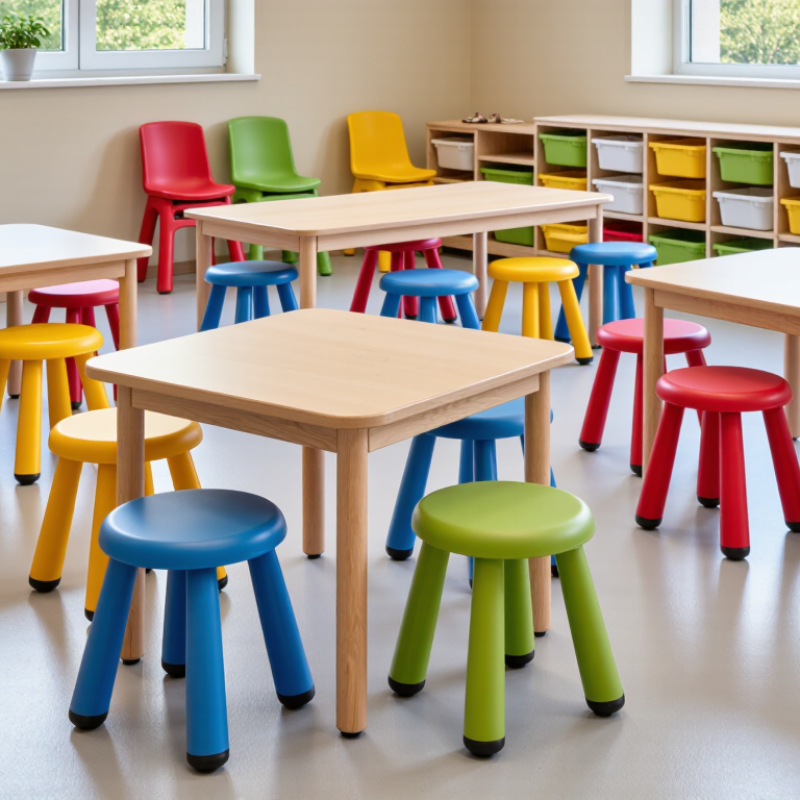
7 Tips for Buying Kids Stools in Bulk

Assess the Number and Needs of the Children Using the Stools

Count the children who will use the stools at the same time, not just total enrollment. A room with 24 children may need fewer stools during small-group activities, but a busy art session may need one for everyone. Observe the room during its busiest routines for several days. Keep a simple tally. It is more reliable than guessing from a floor plan, though schedules can change.

Consider children’s heights, ages, and activities before choosing seat dimensions. A stool should let a child sit steadily, with feet supported where possible and enough room to move safely. Small details matter. Preschoolers may need lower seats, while older children may use stools for craft tables or reading corners. If children have different mobility or balance needs, ask caregivers and relevant staff what would make seating comfortable and accessible. Age alone does not tell the whole story.

Think about how the stools will be handled each day. Can children move them without dragging them across the floor? Is there clear storage space near the activity area? Allow for a few replacements if budget and storage permit, especially in high-use rooms. Even a careful count can miss a child’s changing needs, so review the quantity and fit after the stools have been in use for a few weeks.

Choose Safe, Durable Materials and Child-Friendly Designs

When buying children’s stools in bulk, check the material and the finish, not just the price. Choose smooth, non-toxic finishes and sturdy wood or well-made, impact-resistant plastic. Run a hand along every edge; rough seams can catch clothing or scratch small hands. Ask suppliers for material specifications and test documentation, then inspect samples under ordinary classroom lighting. Tiny cracks are easy to miss.

Stability matters. Look for a wide base, non-slip feet, and a seat that does not wobble on hard floors. The U.S. Consumer Product Safety Commission’s 2023 furniture tip-over data recorded 581 reported deaths between 2000 and 2022; 81% involved children. These figures concern furniture tip-overs, not stools, so they cannot predict stool injuries. They do underline why balance and placement deserve attention. I still test samples on tile and carpet, because a stool that feels steady in a showroom may shift on a classroom floor.

Child-friendly design should support real use: rounded corners, a manageable weight, and a seat height matched to the intended age group. Bright colors can help children identify their seats, but avoid small decorative parts that may loosen. Ask for cleaning guidance, too; textured surfaces can trap crumbs and paint. Check each delivery batch, even when samples looked perfect. Bulk orders can vary, and I have learned not to assume otherwise.

7 Tips for Buying Kids Stools in Bulk - Choose Safe, Durable Materials and Child-Friendly Designs

Tip Buying Factor What to Check Why It Matters Bulk-Buying Action
1 Choose a suitable seat height Measure the intended users and compare their leg length with the stool height. When seated, children should be able to place their feet securely on the floor or a suitable foot support. A stool that is too high or too low can be uncomfortable and may make getting on and off less stable. Confirm the listed seat height for every model and test a sample with children of the intended age and size range.
2 Select durable materials Consider solid wood, plywood, metal, or molded plastic. Check for sturdy joints, smooth surfaces, and finishes intended for the product’s use. Material quality and construction affect how well stools withstand regular use, cleaning, and movement. Inspect a sample for cracks, rough edges, loose joints, or damage. Ask suppliers for care instructions and material specifications.
3 Check stability and weight capacity Look for a level base, a footprint that suits the setting, and a clearly stated maximum load. Follow the maker’s instructions for use. A stable design and a suitable stated load limit help reduce the risk of tipping or structural failure. Request the rated capacity and relevant product test documentation. Do not assume that stools with similar dimensions have the same capacity.
4 Look for child-friendly details Prefer rounded corners, smooth edges, and a seat shape that is comfortable for the intended use. Check that handles or openings do not create pinch points. Thoughtful details can make stools more comfortable to handle and help reduce bumps or pinched fingers during ordinary use. Review product photos and inspect a physical sample, including edges, cut-outs, handles, and underside details.
5 Check feet and floor contact Look for non-slip feet or floor protectors that are firmly attached and appropriate for the floor surface. Suitable feet can help limit sliding and reduce scratches on floors. Their effectiveness depends on the surface and condition. Test samples on the actual floor type where possible, and ask whether replacement feet are available.
6 Consider cleaning and maintenance Check whether the stool has smooth, accessible surfaces and follow the supplier’s recommended cleaning method. In schools, childcare settings, and shared spaces, simple routine cleaning can help keep products presentable and ready for use. Ask for written care guidance and confirm that the recommended cleaning products are practical for your facility.
7 Verify standards, consistency, and delivery Ask which safety requirements apply in your location, and request supporting documents. Check dimensions, finish, packaging, and replacement-part options. Requirements vary by market and product type. Consistent specifications and suitable packaging help avoid surprises when a large order arrives. Approve a sample before ordering, confirm the exact specifications in writing, and arrange an inspection plan for the delivered batch.

Check Stool Height, Weight Capacity, and Stability

Tip: Measure the child and the intended table before ordering. CDC growth charts place median height near 109 cm at age five and 138 cm at age ten, but children vary widely. These figures are a reminder, not a sizing formula. Check that the child can sit with feet supported and knees comfortably bent. Measure from the floor to the back of the knee, then compare that figure with the stool’s seat height. Test one sample with children from the intended age range; age labels alone can mislead.

Tip: Check the listed weight capacity for every stool, and request written product specifications. Allow a sensible margin above the heaviest expected user, especially for shared spaces. Ask suppliers for test documentation and whether the product meets the applicable ASTM F2613 children’s chair-and-stool safety specification. Paperwork matters.

Tip: Stability deserves a hands-on check. On a level floor, press gently at each seat edge and watch for rocking, sliding, or lifting legs. A broad base, secure joints, and non-slip feet can help; uneven floors can still cause trouble. In bulk orders, inspect a sample from each production batch, not just the showroom model. It takes time. Still, a small wobble multiplied across a classroom becomes a daily problem.

Compare Bulk Pricing, Suppliers, and Customization Options

When comparing bulk prices for kids’ stools, ask for a written quote at several order quantities. A lower unit price may exclude freight, assembly, or protective packaging. Check the delivered cost per stool, not just the number on the first page. Ask whether the quote changes with material, finish, or order size. Small details add up.

Request a sample before committing to a large order. Check that the stool feels stable on a hard floor, has smooth edges, and suits the intended age and height range. Ask suppliers about material specifications, production capacity, defect handling, and realistic lead times. Clear answers matter. Customization can include colors, seat height, surface finish, or printed instructions, but each option may affect minimum quantities and delivery dates. More choices are not always better. A custom color may look different under classroom lighting, so review a physical sample if possible. I would also question any supplier who promises every change at no extra cost; that offer may hide limits in the final product. Compare terms side by side, and note what remains uncertain before placing the order.

Bulk Kids’ Stool Pricing: Illustrative Quantity Tiers

Estimated unit price by order size (USD). Larger orders may lower per-stool costs, but final pricing depends on materials, shipping, customization, and supplier terms.

Illustrative planning estimates only—not supplier quotes. Request comparable quotes and confirm customization, safety requirements, shipping, and lead times.

Plan Quality Checks, Delivery, and Storage Before Ordering

Buying kids’ stools in bulk requires more than comparing unit prices. Ask suppliers for load ratings, material details, and cleaning instructions. Check that each stool sits level on a hard floor, with no sharp edges or loose joints. Request a sample when possible, then inspect several units from the shipment. Small differences can matter.

Tips: Set clear acceptance checks before ordering. Measure seat height against the tables children will use, and confirm the stools stack safely if storage space is limited. Photograph any damage as boxes arrive. Keep a few extra stools for replacements, but avoid ordering too many before testing the sample.

Plan delivery and storage together. Confirm the number of cartons, unloading arrangements, and access to the building. A large shipment may need a clear path and a dry indoor space. Store stools away from radiators, damp walls, and heavy items that could scratch or bend them. Leave room to inspect cartons before signing for delivery. I once underestimated storage space; it was inconvenient, and worth planning better.