China Top 10 Bird Control Spikes Manufacturers?
Choosing a reliable Bird Control Spikes manufacturer involves more than comparing prices. Product material, spike spacing, base design, and installation options can affect performance on ledges, signs, and rooflines. Stainless steel and durable polycarbonate are common choices, but suitability depends on the site and exposure to weather. Small details matter.
This guide to China’s top 10 Bird Control Spikes manufacturers is intended to help buyers compare suppliers, not to claim that one ranking fits every project. Useful questions include whether a company shares clear product specifications, explains mounting methods, supports custom lengths, and provides consistent communication. Ask for current product samples or technical documents where appropriate. Verify claims independently.
A careful supplier review also considers packaging, lead times, export experience, and after-sales support. These practical points can matter when spikes must fit a narrow parapet or arrive in stages for a large property. Bird control products should be selected and installed thoughtfully, with attention to the target site and the animals present. A product may look suitable in a catalogue yet prove awkward on a curved surface. That is worth admitting. Buyers should confirm measurements and installation requirements before placing an order, since supplier information and project conditions can differ. The following overview offers a starting point for that comparison, while encouraging readers to check details directly with each manufacturer.
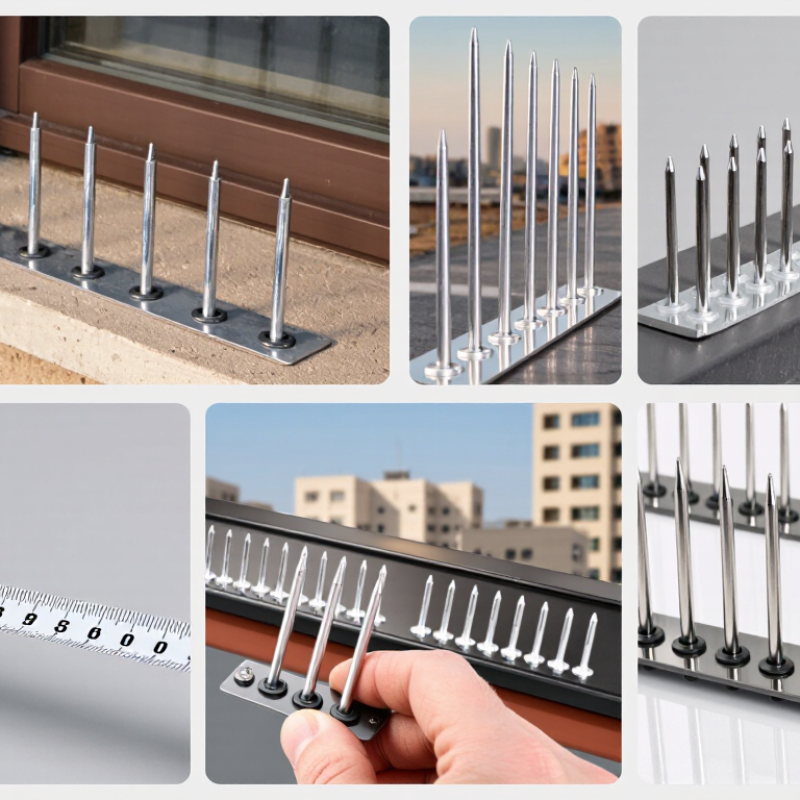
What Bird Control Spikes Are and Where They Are Used
What Bird Control Spikes Are and Where They Are Used
Bird control spikes are narrow strips fitted with upright rods that make a surface difficult for birds to land on. Properly selected systems discourage perching without forming a sealed barrier. Rod spacing, strip width, and the mounting surface matter. A loose strip on a dusty stone ledge may fail, while a securely fixed strip can cover a narrow parapet effectively.
They are commonly installed on roof edges, window ledges, signs, canopies, beams, and pipes where droppings or nesting materials create maintenance problems. They are not barriers. Spikes do not stop birds from flying nearby, and they may not address food sources or sheltered nesting spots. Installers should measure the surface, clean it, and choose a fixing method suited to the material. Avoid blocking drainage or placing spikes where routine access is needed.
Bird management also needs restraint. The 2022 State of the Birds report, produced by the North American Bird Conservation Initiative and partner organizations, estimated that North America had lost nearly three billion breeding birds since 1970. That figure does not mean every bird landing on a building is a problem. It is a reminder to target deterrents only where there is a clear maintenance or safety need. Before work near active nests, check local wildlife guidance. Even careful installations can need adjustment after weather, dirt, or building repairs.
How Spike Design and Materials Affect Performance
Bird-control spike performance depends on more than the number of rows. When comparing manufacturers, examine the spike material, spacing, height, and attachment base together. Stainless steel resists corrosion and holds its shape, while UV-stabilized plastic can be lighter and easier to trim. Coastal sites need particular care: low-grade metal may stain or weaken after repeated exposure to salty air. Small details matter.
Spike spacing should discourage landing without leaving wide gaps where birds can perch. Blunt, carefully shaped points are intended to deter landing, not trap birds. The base must also match the surface. A narrow ledge may need a flexible strip, while a broad sign top can support a rigid one. Check whether the fastening method suits the substrate and expected weather; an adhesive that works on clean metal may fail on dusty masonry. Installation matters.
There is no universal best design. A dense strip can collect leaves, while an overly sparse layout may leave usable perching space. That trade-off is easy to overlook. Compare material specifications, UV and corrosion testing, and replacement options—not just price. Then assess the actual ledge, including its width, slope, and exposure to wind. Even a sound product can underperform when its dimensions do not fit the site.
How to Evaluate Bird Control Spike Manufacturers in China
China Top 10 Bird Control Spikes Manufacturers?
When evaluating bird control spike manufacturers in China, compare the product details rather than relying on polished catalog photos. Ask for the spike material, base dimensions, pin spacing, and installation guidance. Stainless steel pins and UV-resistant polymer bases may suit exposed areas, but the right combination depends on the site. Check how edges, corners, and joints are handled. Small details matter.
Request samples and inspect them under ordinary conditions. Look for sharp, consistent pin tips, an even base, and secure pin attachment. Ask how the manufacturer checks batches for spacing and material consistency. A specification sheet can look complete, yet tell you little about production checks. Request relevant test records and confirm what each document actually covers. This step is easy to overlook.
Evaluate communication and production capacity, too. Ask for a clear quotation, sample lead time, packaging details, and realistic shipping estimates. Compare answers for specific, consistent information, not just speed. If possible, arrange a factory audit or use an independent inspection service before a large order. There is no perfect checklist; a sample may not reveal every production issue. Still, careful questions make supplier comparisons more grounded.
How to Evaluate Bird Control Spike Manufacturers in China
Suggested evaluation priorities for comparing suppliers—not measured scores or rankings of individual manufacturers.
How to use this chart: Use the percentages as a starting point when assessing suppliers. Confirm product materials and specifications, request relevant quality and test documentation, and evaluate samples against your installation environment and project requirements.
Profiles of 10 Chinese Bird Control Spike Manufacturers
Profiles of 10 Chinese Bird Control Spike Manufacturers
Comparing ten Chinese bird control spike manufacturers is most useful when profiles look beyond catalog photos. Record each supplier’s spike material, base design, pin spacing, available lengths, and stated production capacity. Ask whether stainless steel grades and UV-resistant polymer components are documented. A neat sample is helpful. It is not proof of outdoor durability. Request product drawings, inspection records, and packaging details before comparing quotations.
The UN Department of Economic and Social Affairs’ World Urbanization Prospects 2018 report estimated that 55% of the global population lived in urban areas in 2018, rising to a projected 68% by 2050. This is relevant context: dense buildings create more ledges, signs, and roof edges requiring maintenance. For each manufacturer profile, note experience supplying these varied surfaces, plus options for adhesive, screw, or clamp installation. Fit depends on the substrate and site conditions.
Profiles should also separate factory evidence from trading claims. Check whether the supplier describes its own forming, cutting, and assembly steps, and whether it can provide consistent dimensions across repeat orders. Ask how sharp edges are finished and how spikes are protected in transit. Small details matter. Public product data rarely reveals long-term performance, and even a careful comparison leaves some uncertainty. Do not treat a low price as a durability test.
How to Compare Suppliers, Products, and Service Options
When comparing China-based bird-control-spike suppliers, request the same specifications from each: spike material and grade, base dimensions, pin spacing, UV resistance, and installation method. Ask for material certificates and corrosion-test results, not just claims such as “marine grade.” NACE International’s 2016 IMPACT study estimated corrosion costs at US$2.5 trillion annually, or about 3.4% of global GDP. That figure covers many industries, not bird spikes, but it shows why exposed metal and fixings deserve careful review. Salt-spray hours are useful for comparison; they do not translate directly into years outdoors. No test is perfect.
Compare service as closely as the product. Check whether suppliers provide layout drawings, installation guidance for corners and narrow ledges, spare parts, and a clear warranty process. Request photos of completed projects in similar climates, then ask how installers handle drainage, cleaning access, and bird-safe placement. A 2019 study published in Science estimated that North America had lost nearly three billion birds since 1970. It did not evaluate deterrent products, but it is a reminder to assess humane design alongside coverage and durability. A polished quotation can still leave gaps. Verify response times, packaging details, and who pays for replacements before placing a bulk order.