China Top 10 Konjac Noodles Suppliers?
Choosing reliable Konjac Noodles suppliers in China requires more than comparing online prices. Product quality can vary by raw material, processing control, and packaging conditions. This guide introduces ten notable suppliers for buyers seeking stable manufacturing support, export experience, and clear product information.
The selection focuses on practical details. These include konjac flour sourcing, noodle texture, odor control, sanitation systems, private-label capability, and minimum order quantities. Suppliers with HACCP, ISO, BRC, or similar certifications may offer stronger quality assurance. However, certificates should be checked carefully. A logo alone proves little.
Texture matters greatly. A well-made noodle should feel firm after rinsing and cooking, without becoming rubbery. Buyers should request samples and compare flavor, drainage, pouch sealing, and shelf-life statements. Factory videos are useful, but an independent audit provides stronger evidence. That distinction is easy to miss.
The list also considers export documentation, response speed, packaging flexibility, and experience with overseas markets. Some manufacturers may support retail pouches, foodservice cartons, or customized branding. Others may focus on large-volume production. The best choice depends on your sales channel, target region, and required certifications.
No ranking can fit every buyer. A supplier serving supermarkets may not suit a small online brand. Pricing can change with konjac content, packaging materials, freight costs, and seasonal demand. These factors deserve written confirmation before signing a purchase agreement.
This guide is a practical starting point, not a final verdict. Verify every claim directly. Detailed comparisons can reveal both strong opportunities and overlooked risks.
What Are Konjac Noodles and Why Are They Popular?
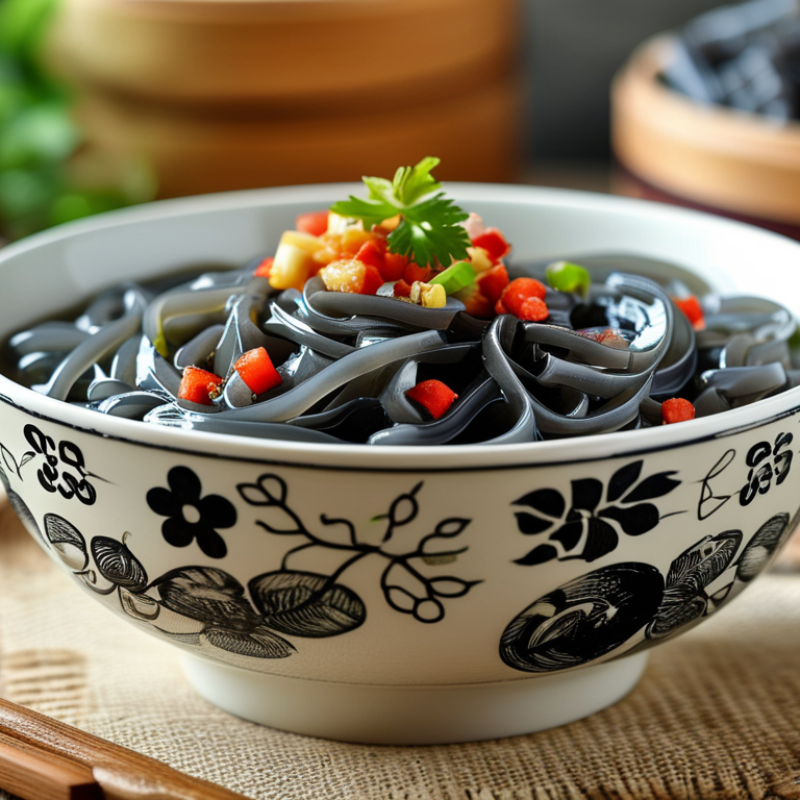
Konjac noodles are translucent strands made from konjac glucomannan, a soluble fiber extracted from the konjac root. They contain very little digestible carbohydrate and usually provide only a few calories per prepared serving. Nutrition values vary by formula, serving size, and rinsing method. The United States Food and Drug Administration lists 28 grams as the daily value for dietary fiber, but one noodle serving should not be treated as a complete fiber strategy. The “zero-calorie” impression can mislead.
Their popularity reflects several market trends. Grand View Research reports continued growth in the global konjac market, supported by demand for low-carbohydrate and plant-based foods. Fortune Business Insights also identifies weight-management products and functional ingredients as important growth drivers. Konjac noodles offer a chewy texture and absorb sauces well. They are useful in quick meals, especially for consumers reducing wheat or rice. However, their smell can seem earthy after opening. Rinsing and boiling usually improve the eating experience. Texture remains personal.
Tips: Choose sealed products with clear ingredient and nutrition labels. Rinse thoroughly, then simmer for two or three minutes. Add vegetables, protein, and a flavorful sauce. Check fiber tolerance carefully, because sudden increases may cause bloating. For suppliers, verify food-safety certifications, traceability records, moisture control, and testing for contaminants. Reported market forecasts are helpful, but they cannot replace batch-level quality checks. This is where sourcing decisions often become less simple.
China Top 10 Konjac Noodles Suppliers? - What Are Konjac Noodles and Why Are They Popular?
| Dimension | Verified Product Fact | Commercial Importance |
|---|---|---|
| Primary ingredient | Konjac noodles are generally made from konjac glucomannan, water, and a food-grade alkaline setting agent. | Glucomannan creates the characteristic translucent, elastic, and chewy texture. |
| Common product forms | Shirataki noodles, rice-shaped konjac, fettucine-style noodles, spaghetti-style noodles, and konjac noodle blocks. | Different shapes support hot-pot dishes, stir-fries, soups, salads, and low-carbohydrate meal products. |
| Typical energy value | Many water-packed konjac noodle products provide approximately 5–20 kcal per 100 g, depending on the formulation and draining method. | Low energy density is a major reason for their popularity in calorie-conscious diets. |
| Carbohydrate profile | Plain konjac noodles generally contain very little digestible carbohydrate; the exact value depends on added starch and the nutrition-label calculation method. | Suitable for many low-carbohydrate product concepts when the final label is independently verified. |
| Dietary fiber | Konjac glucomannan is a soluble dietary fiber. The fiber amount varies according to glucomannan concentration and serving size. | Fiber content should be confirmed through laboratory testing before making a nutrition or health claim. |
| Preparation requirement | Water-packed noodles are normally drained, rinsed, and heated or stir-fried before serving. | Rinsing and heating reduce the characteristic alkaline odor and improve flavor and texture. |
| Storage format | Common formats include ambient water-packed pouches, retort pouches, and dry konjac noodle products. | Packaging format affects shelf life, freight cost, storage requirements, and distribution channels. |
| Allergen considerations | Plain konjac noodles may contain no major allergen ingredients, but cross-contact and added sauces or seasonings must be checked. | Each finished product requires an ingredient review and an allergen-control statement. |
| Rank | Supplier Profile | Typical Production Focus | Available Formats | Typical Pack Options | Indicative MOQ | Indicative Lead Time | Documentation to Request |
|---|---|---|---|---|---|---|---|
| 01 | Profile A | Large-scale ambient konjac noodle production | Shirataki, spaghetti, rice, fettucine | 150–200 g retail pouch; 1–5 kg foodservice pack | Usually 1–3 pallets for standard products | Approximately 20–35 days after artwork approval | HACCP or equivalent food-safety system, product specification, COA, microbiological report, packaging specification |
| 02 | Profile B | Private-label products for supermarkets and online retailers | Plain noodles, seasoned noodles, meal kits | Single-serve pouch, multi-pack carton, display-ready case | Often 5,000–20,000 retail units | Approximately 30–45 days for customized packaging | Ingredient declaration, nutrition data, shelf-life study, barcode and carton-marking information |
| 03 | Profile C | Organic-oriented and clean-label product lines | Plain konjac noodles and rice-shaped products | Water-packed pouch or recyclable retail packaging | Usually 1–2 pallets, subject to certification requirements | Approximately 25–40 days | Organic certificate where applicable, non-GMO declaration, allergen statement, pesticide-residue testing, COA |
| 04 | Profile D | Foodservice and bulk ingredient supply | Long noodles, noodle blocks, rice-shaped granules | 1 kg, 2 kg, 5 kg, or 10 kg foodservice bags | Typically 500–1,000 kg for standard specifications | Approximately 15–30 days | Bulk specification, pallet pattern, storage conditions, transport temperature requirements, COA |
| 05 | Profile E | Export-focused ambient noodle manufacturing | Retail noodles, private-label noodles, export cartons | 100–400 g pouches and mixed-SKU export cartons | Often 1 full pallet per SKU | Approximately 25–40 days, excluding shipping | Commercial invoice template, packing list, certificate of origin, health certificate where required, product COA |
| 06 | Profile F | Low-carbohydrate and high-fiber product development | Plain noodles, fortified noodles, vegetable-blended noodles | Portion pouch, retort pouch, refrigerated trial pack | Approximately 3,000–10,000 units for pilot production | Approximately 35–60 days for new formulas | Full formula, nutrition laboratory report, stability data, additive compliance statement, sample approval record |
| 07 | Profile G | Convenience-food and ready-to-eat applications | Seasoned noodles, soup noodle kits, microwaveable meals | Retort pouch, cup format, tray format, multipack carton | Usually 10,000–30,000 finished units | Approximately 45–75 days for complete meal kits | Thermal-process record, retort validation, shelf-life report, sauce specification, packaging migration test |
| 08 | Profile H | Flexible-format manufacturer for emerging brands | Custom noodle shapes, mixed sizes, assorted textures | Small retail pouch, sample pack, promotional multipack | Often 2,000–8,000 units for approved stock formats | Approximately 20–45 days | Tooling or mold quotation, tolerance specification, sample-retention policy, batch traceability records |
| 09 | Profile I | Cost-efficient standard noodle manufacturing | Basic shirataki and rice-shaped noodles | Standard pouch and bulk carton | Typically 1–3 pallets for existing packaging | Approximately 15–30 days | Factory audit materials, production-flow diagram, raw-material specification, batch COA, complaint procedure |
| 10 | Profile J | Small-batch and product-testing production | Plain noodles, trial flavors, prototype formats | Sample pouch, laboratory batch, small retail run | Approximately 500–3,000 units for selected stock products | Approximately 10–25 days for samples; longer for scale-up | Sample COA, pilot-batch report, ingredient traceability, packaging mock-up, export feasibility confirmation |