
Why Choose Wooden String Game for Global Buyers?

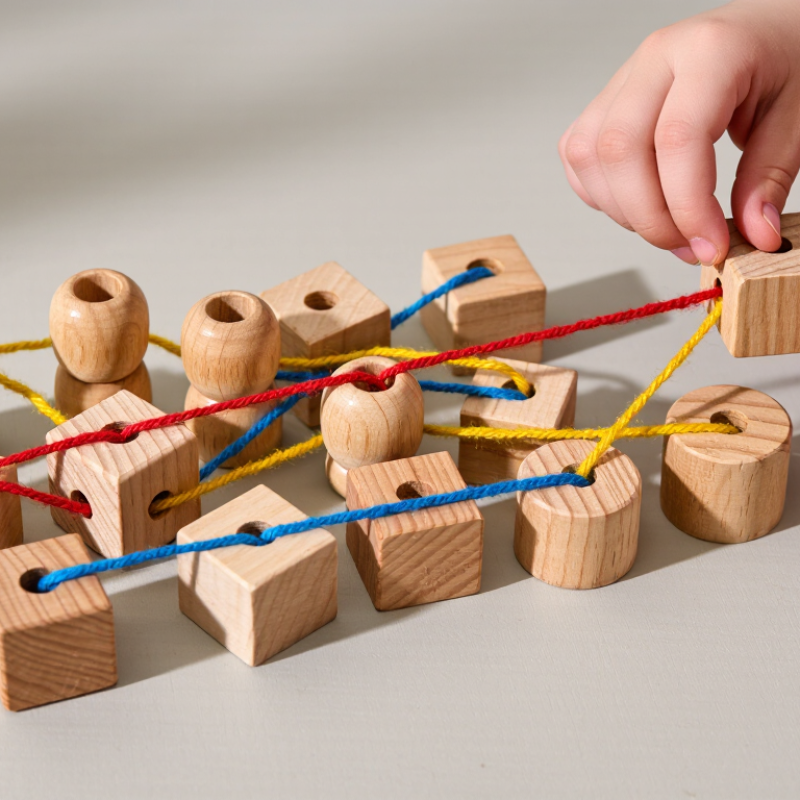
Why Choose Wooden String Game for Global Buyers? The answer begins with a simple experience: a child pulls a smooth wooden piece through a bright cotton string, then tries again after missing the target. This small moment creates focus, coordination, and shared play without screens. Wooden String Game also offers a warm, tactile alternative to mass-produced plastic toys.

Global buyers often value its natural appearance, compact packaging, and flexible branding potential. Responsibly selected wood, rounded edges, non-toxic finishes, and securely attached strings can support safer product design. However, quality should never rely on appearance alone. Experienced suppliers should provide material details, production samples, age guidance, and relevant test documentation for each target market. Buyers should also inspect paint coverage, knot strength, surface smoothness, and carton protection before placing larger orders.

The product is not flawless. Wood grain can vary, and handmade details may create small differences between pieces. That is part of its character, but it also requires honest quality control. A reliable manufacturer explains these limits instead of hiding them. Clear communication matters when discussing colors, dimensions, logo placement, packaging, and delivery schedules. For distributors, educators, gift retailers, and family-focused brands, this traditional game can combine practical value with visual appeal. It is simple to demonstrate. It is easy to remember. Yet its success depends on careful sourcing, responsible production, and thoughtful inspection.
Why Choose Wooden String Game for Global Buyers?

Product Overview and Core Features of Wooden String Games

Wooden string games combine a solid wooden frame, flexible cords, pegs, and pattern cards. Their appeal is simple: children can touch, pull, loop, and rebuild. Grand View Research estimated the global wooden toys market at USD 25.4 billion in 2022. It also forecasts a 10.7% compound annual growth rate from 2023 to 2030. This growth reflects demand for tactile, screen-free learning products.

A dependable product should use smooth, splinter-resistant wood and securely fixed pegs. Cords need firm knots, visible color contrast, and enough length for repeated patterns. Rounded edges matter. So does clean packaging. Buyers should check age guidance, material declarations, and applicable toy-safety testing before placing international orders. The product should include beginner designs, but advanced cards can improve repeat play. Small parts require careful handling.

Practical testing often reveals weaknesses. A cord may fray after frequent pulling. A peg may loosen sooner than expected. That is not a minor detail. Export buyers should request sample testing, drop checks, and batch inspection records. A 2024 Circana industry report noted continued pressure on global toy sales, making durability more important for value-conscious customers. Wooden string games are not automatically educational. Their learning value depends on clear instructions, suitable difficulty, and adult guidance. The best versions leave room for mistakes. That makes play feel real.

Why Choose Wooden String Games for Global Buyers?

Wooden string games combine tactile natural materials with simple skill-based play. The category is typically battery-free, reusable, compact, and suitable for gift, educational, and family-play channels.

The chart presents category-level core features as a buyer checklist: wooden components and string-based interaction define the product, while battery-free operation, reusability, portability, and skill-based play support international merchandising and shipping.

Materials, Craftsmanship, and Safety Considerations

Wooden string games appeal to global buyers because material quality is visible and tactile. Wood is never perfectly uniform. That is the uncomfortable part. Responsible makers inspect grain, moisture, knots, and splitting before shaping each piece. Hardwoods can provide better wear resistance, but species selection must match the game’s design and intended age. Smooth edges, secure joints, and controlled sanding matter more than decorative details. Coatings should be tested for heavy metals and other restricted substances under relevant market requirements.

Craftsmanship should be supported by evidence, not attractive photographs alone. Independent testing against standards such as ASTM F963 or ISO 8124 can assess mechanical safety, accessible points, coating migration, and durability. The U.S. Consumer Product Safety Commission estimated 231,700 toy-related emergency-department injuries among children under 15 in 2023. This figure covers toys broadly, yet it shows why small components, cords, and breakage deserve serious attention. String length, loop formation, and attachment strength require age-specific evaluation. A factory may pass one sample and still overlook batch variation.

Tips: Ask suppliers for material identification, test reports, age grading, and batch records. Check whether cords remain firmly attached after repeated pulling. Rub painted surfaces with a clean cloth. Watch for loose fibers, sharp corners, or a strong chemical odor. Documentation can be incomplete. Buyers should question unclear results and request current laboratory evidence. A practical inspection, repeated before shipment, often reveals flaws that certification paperwork misses.

Why Choose Wooden String Game for Global Buyers? - Materials, Craftsmanship, and Safety Considerations
Evaluation Dimension Recommended Material or Feature Relevant Data or Typical Specification Craftsmanship and Quality Check Safety and Global Buyer Considerations
Primary Wooden Components Solid beech, maple, birch, or responsibly sourced hardwood Hardwood density is commonly about 600–750 kg/m³, depending on species and moisture content. Use straight-grained wood with no active cracks, loose knots, sharp splinters, or structural weakness. Hardwood parts should be smooth, durable, and suitable for the intended age group. Buyers should request material documentation when required by the destination market.
Wood Moisture Stability Kiln-dried or properly conditioned wood Indoor wooden products are commonly conditioned to approximately 8%–12% moisture content, although the suitable range varies by climate and product design. Check for warping, shrinkage, open joints, and dimensional changes after conditioning and assembly. Stable moisture levels help reduce cracking and loose components during international shipping and changes in humidity.
String or Cord Material Braided cotton, polyester, or other tested textile cord Common cord diameters are approximately 2–4 mm, selected according to the game design and required strength. Inspect braid consistency, knot security, pull strength, abrasion resistance, and resistance to fraying. The cord length and loop design should be evaluated for age-related entanglement and strangulation risks. Avoid unnecessary long, loose loops for young children.
Surface Finish Water-based coating, plant-based oil, or unfinished polished wood Finishes should be fully cured before packing and should not leave a strong residual odor or sticky surface. Look for even coverage, no peeling, no flaking, no exposed sharp edges, and consistent color across the wooden parts. For children’s products, coatings may need to meet applicable limits for migration of certain elements under standards such as EN 71-3, ASTM F963, or ISO 8124, depending on the target market.
Edge and Corner Treatment Rounded, chamfered, and finely sanded edges There should be no accessible burrs, splinters, sharp points, or unfinished cut edges. Use progressive sanding and perform manual tactile inspection on every accessible surface. Pay special attention to drilled holes and rope-entry points. Rounded edges reduce the risk of cuts and puncture injuries during normal handling and play.
Assembly Strength Reinforced joints and mechanically secure cord attachments Components should remain attached during foreseeable pulling, twisting, and repeated-use conditions. Conduct pull, torque, drop, and repeated-use checks appropriate to the product category and intended age group. Small parts that can detach may create a choking hazard. Testing should consider the most demanding reasonably foreseeable use, not only normal gentle play.
Small-Part Risk Integrated parts or securely fixed components Detachable components should be assessed using the applicable small-parts test method for the target age range. Inspect knots, beads, rings, pegs, clips, and decorative elements before and after durability testing. Products intended for children under three years generally face stricter small-part requirements in many jurisdictions. Age grading must match the actual design risk.
Packaging Protection Recyclable paperboard, molded pulp, or protective fabric packaging Packaging should prevent abrasion, moisture exposure, and component loss during transport. Use internal dividers or sleeves where wooden parts may rub against each other. Confirm that all instructions and components are included. Packaging should not introduce unnecessary plastic film, accessible long ties, or detachable elements that create additional hazards for children.
Traceability and Documentation Batch identification and material records Maintain records for wood source, coatings, cord materials, production batches, inspections, and test reports. Use a consistent batch code and retain samples for quality comparison and investigation of customer complaints. Global buyers may need technical files, test reports, labeling, warnings, age grading, and conformity documentation for the destination country.
Environmental Responsibility Legally sourced wood and low-impact packaging Wood legality and certification requirements vary by supply chain and destination market. Keep supplier declarations, chain-of-custody information, and documentation for any environmental claim made on the packaging or product page. Buyers should avoid unsupported claims such as “non-toxic,” “eco-friendly,” or “100% sustainable” unless they can be substantiated with reliable evidence.
International Compliance Market-specific testing and labeling plan Common reference frameworks include EN 71 in the European market, ASTM F963 in the United States, and ISO 8124 in various international markets. Testing should be performed on the final production configuration, including wood, coating, cord, adhesives, packaging, and decorative parts. Requirements differ by country, product classification, age grading, and intended use. A current assessment for each target market is recommended before shipment.
Important: The specifications shown are practical reference ranges rather than universal legal limits. Final material selection, age grading, testing, warnings, and labeling should be confirmed against the current regulations of each destination market.

Benefits for Education, Recreation, and Skill Development

Why Choose Wooden String Game for Global Buyers?

Wooden string games bring learning away from screens and into the hands. Children guide cords, connect points, and adjust movements through direct feedback. These actions can support hand-eye coordination, finger control, and early spatial awareness. The materials also offer a warm, natural texture that many classrooms find inviting.

In educational settings, teachers can use the game during quiet practice, partner activities, or short problem-solving tasks. One child may follow a pattern, while another creates a new route. Small groups learn to communicate, wait for turns, and explain their choices. The activity feels playful, but it requires concentration. That balance matters.

Families and recreation centers can use wooden string games for relaxed skill development. Players improve through repeated attempts, not instant success. A difficult knot may encourage patience, although not every child enjoys the same challenge. Adults should check smooth surfaces, secure fittings, and age suitability before use. The game cannot replace broader learning, either. Its value grows when adults ask questions, demonstrate safely, and allow children to experiment. Some sessions become noisy. That is part of the experience.

Customization, Packaging, and Market Adaptability

Why Choose Wooden String Game for Global Buyers?

Customization should begin with play, not decoration. A wooden string game can use different board shapes, rope colors, hole layouts, and difficulty levels. These details help buyers match local age groups and learning goals. In practical sampling, knot tension matters greatly. Loose knots frustrate children, while tight knots reduce playability. Small changes often matter more than attractive graphics.

Packaging must protect the product and explain it quickly. A compact kraft box can reduce shipping volume and improve shelf efficiency. PwC’s Voice of the Consumer Survey 2024 found that 46% of consumers consider environmental impact when purchasing. The same study reported an average willingness to pay 9.7% more for sustainable products. Recyclable paper, soy-based printing, and plastic-free inner protection may support that expectation. Still, “eco-friendly” claims need evidence. Overstating them weakens buyer trust.

Market adaptability requires more than translation. Instructions should use simple diagrams, clear age guidance, and region-appropriate safety information. Packaging dimensions also need adjustment for different retail shelves and courier systems. Circana reported a 7% decline in global toy sales during 2023, increasing pressure on inventory decisions. Smaller trial orders can reduce risk, although they may raise unit costs. That trade-off deserves honest calculation. A useful product should survive shipping, customs handling, and repeated play. Sometimes, the simplest design performs best.

Key Factors for Global Buyers When Selecting Suppliers

Why Choose Wooden String Game for Global Buyers?

Global buyers should examine the supplier before admiring the product. A wooden string game may look simple, but quality depends on careful cutting, smooth sanding, safe coatings, and strong assembly. Ask for material details, coating information, and recent safety test reports. The wood should feel clean, dry, and free from sharp edges. Small details matter.

Request a physical sample before placing a large order. Check the string tension, knot strength, moving parts, and package durability. Drop the packed sample from a low height and inspect the corners afterward. This practical test can reveal weak cartons or loose components. Product photos cannot show everything.

A reliable supplier should explain production steps, inspection points, and corrective actions when defects appear.

Production capacity also deserves close attention. Confirm minimum order quantities, lead times, labeling options, and export documents in writing. Clear communication reduces costly misunderstandings across time zones. Suppliers with traceable material records and consistent inspection routines offer stronger evidence of professionalism.

Still, buyers should remain realistic. One successful sample does not guarantee every shipment will match it. I have learned that repeated sampling and independent checks may feel slower, but they often protect budgets, customer trust, and delivery schedules. A supplier who welcomes reasonable questions is usually easier to work with. Not always, though. Monitor performance over time.