Choosing fabric for a sofa, dining chair, or vintage armchair is not only a style decision. It is a practical investment in comfort, durability, and daily living. A reliable upholstery fabric outlet can offer hundreds of textures, colors, fiber blends, and discounted remnants. That variety feels exciting, but it can also become confusing. A beautiful velvet may show every fingerprint. A pale linen may look elegant, yet struggle in a busy family room.
Interior designer and textile authority Billy Baldwin once said, “Be faithful to your own taste, because nothing you really like is ever out of style.” His advice still matters when comparing outlet fabrics. Personal taste should guide the choice, but performance testing must support it. Check the fabric’s abrasion rating, fiber content, width, cleaning instructions, and available quantity. Always request a physical sample. Computer screens can distort color, especially under warm household lighting.
Small details matter. Rub the swatch between your fingers. Hold it beside the existing wood frame. Sit on a similar upholstered cushion, if possible. Then imagine coffee, sunlight, pets, and repeated use. It is easy to focus on price and forget installation waste. I have seen shoppers choose a bargain fabric that barely covers the project. That mistake is expensive.
No checklist is perfect. Some decisions remain uncertain. Still, careful questions can turn an upholstery fabric outlet visit into a confident purchase. The following seven tips explain what to inspect, what to question, and when a lower price may not represent better value.
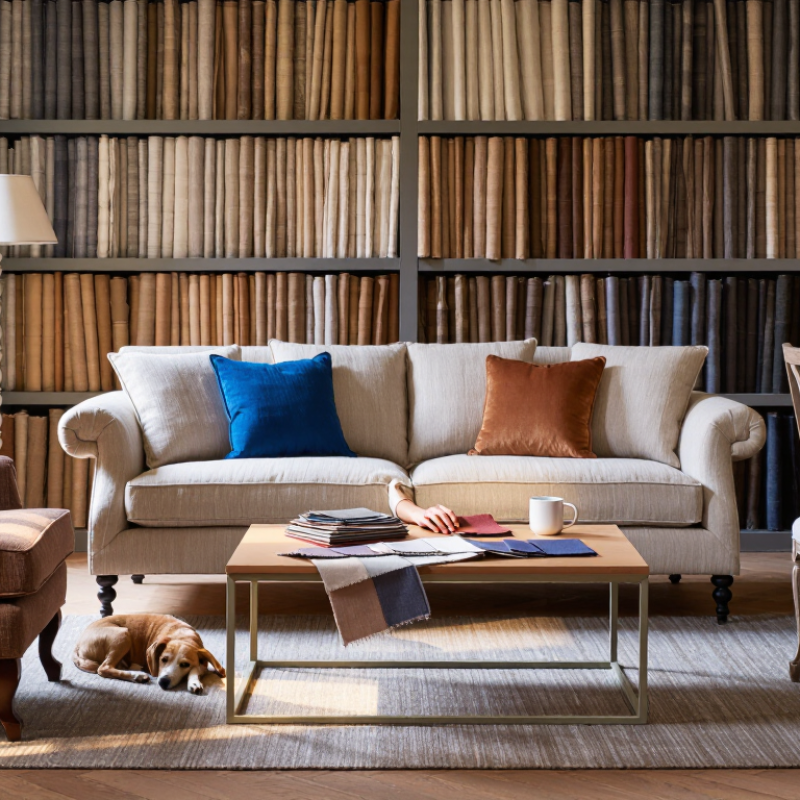
Choosing an upholstery fabric outlet starts with understanding its grading system. “First quality” usually means consistent color, weave, and finish across the roll. “Second quality” may include small slubs, printing shifts, or irregular edges. Ask which defects are acceptable.
A low price can hide uncertainty. Request a written grade description and inspect a full-width sample under natural light. Feel the backing, check the selvage, and look for loose threads.
I once trusted a small swatch and missed a visible shade change across the bolt. That mistake was expensive.
Outlet terms are not always standardized, so clear questions matter.
Fiber content should match the furniture’s daily demands. Wool and tightly woven polyester often resist wear, while linen offers a relaxed texture but can wrinkle. Cotton feels comfortable, yet it may fade or stain without protection. Rayon and other regenerated fibers can look elegant, but they may weaken with moisture or heavy friction. Blends complicate the decision.
Consider the intended upholstery use before buying. A dining chair needs stain resistance and a durable weave. A living-room sofa needs comfort, colorfastness, and reliable recovery after sitting. Decorative fabric may suit cushions, but fail on a frequently used recliner. Check the supplier’s abrasion results, cleaning code, lightfastness data, and fire-safety documentation where required. A high rub rating is useful, not magical. Test the fabric against seams, piping, and the furniture’s curves before ordering the entire amount.
When choosing an upholstery fabric outlet, match the double-rub rating to daily traffic, not marketing language. ACT Upholstery Performance Guidelines commonly use 15,000 double rubs for light residential use, 30,000 for active household areas, and 60,000 for demanding commercial settings. A seldom-used reading chair may need 15,000. A family sofa facing the television deserves closer attention to 30,000.
Busy waiting rooms are different. For corridors, reception seating, or dining benches, 60,000 double rubs offers a more suitable target. ASTM D4157 describes the Wyzenbeek method used for this abrasion testing, but the result is not a guaranteed service-life number. Cleaning, sunlight, pets, fabric construction, and sharp furniture edges can change performance quickly. I have seen a high-rated textile fail early beside a rough wall.
Look beyond the number. Ask the outlet for the test method, fabric composition, backing details, and cleaning code. Do not compare Wyzenbeek results directly with Martindale results; the methods are different. The Association for Contract Textiles also stresses evaluating seam slippage, colorfastness, and flammability alongside abrasion performance. That broader check matters. A 60,000-rub fabric can still pill, fade, or feel stiff. A softer 15,000-rub fabric may be perfectly reasonable for a decorative accent chair. Traffic estimates are useful, but they are still estimates. Testing a large swatch at home may reveal more than a sales tag.
When choosing an upholstery fabric outlet, inspect performance data before admiring the color wall. Request a current technical sheet for every shortlisted fabric. ACT’s Upholstery Fabric Performance Guidelines identify practical benchmarks for commercial upholstery, including lightfastness, crocking, pilling, and seam slippage. A fabric rated Grade 4 for lightfastness after 40 AFU offers stronger evidence than a vague “fade resistant” label. Still, sunlight through a large window can expose weaknesses faster than showroom lighting.
Test colorfastness with a white cloth, especially against deep blue, red, or charcoal fabrics. ACT guidance commonly evaluates dry and wet crocking, with Grade 4 dry and Grade 3 wet often used as useful benchmarks. Check pilling results under ASTM D3511 or the stated equivalent method; a rating near 3.5 or higher is generally preferable for demanding seating. Ask how the fabric was tested. Test results are not interchangeable.
Seam slippage deserves equal attention. ACT guidance uses a 25-pound load and limits opening to about one-quarter inch for many upholstery applications. Inspect the weave closely. Loose yarns may look luxurious but can separate beside a tight cushion seam. Rub the sample, bend it around a corner, and examine the reverse side. I once trusted a high abrasion figure and overlooked weak construction. That was a costly reminder. Performance numbers guide decisions, but hands-on inspection still matters.
7 Tips for Choosing the Best Upholstery Fabric Outlet
A low price is not a complete saving. Ask the outlet for the fabric’s cleaning code before buying. Code W permits water-based cleaners. Code S requires solvent-based products. WS allows both, while X usually permits vacuuming only. These labels guide care, but they are not universal legal standards. Confirm the supplier’s written instructions and test a hidden area first.
Flammability documentation deserves equal attention. NFPA’s Home Structure Fires analysis for 2016–2020 found upholstered furniture was first ignited in about 2% of reported home fires, yet involved roughly 24% of fire deaths. That contrast matters. Request test information, applicable standards, and labeling details for your location. In the United States, check whether the material supports applicable requirements under California TB 117-2013 and federal upholstered-furniture rules. Requirements can differ by use and jurisdiction.
Care instructions should match real life. A pale fabric near a dining table needs stronger stain planning than a decorative chair. Check abrasion results, fiber content, lightfastness, and recommended cleaning tools. Ask how often professional cleaning is advised. A soft, tightly woven sample may still show oil marks quickly. I have trusted attractive swatches before and regretted skipping the care sheet. Test before ordering. Ask for the paperwork.
Check cleaning codes, flammability compliance, and care requirements before purchasing upholstery fabric.
W allows water-based cleaners, S allows solvent-based cleaners, WS allows either type, and X indicates vacuuming or light brushing only.
Ask the outlet for current compliance documentation, such as applicable California TB117-2013 or local furniture-safety requirements. Requirements vary by market and product use.
Confirm the manufacturer’s care label, expected cleaning frequency, colorfastness, abrasion suitability, and whether professional cleaning is recommended.
The chart uses the standard upholstery cleaning-code meanings published by the Association for Contract Textiles (ACT). Always follow the specific fabric manufacturer’s instructions.
A reliable outlet should show the true price per yard, not only a tempting roll price. Ask whether cutting, shipping, or backing charges apply. Compare the same fabric weight and fiber content. A cheaper yard may need extra material because of a large pattern repeat. Measure twice. Add at least 10 percent for matching and cutting waste. I once underestimated a striped fabric and had to reorder one yard.
Request a dye lot number before purchasing. Fabric from different dye lots can vary slightly, even when the color name matches. This difference becomes obvious across a sofa cushion or dining chair. Ask the outlet to reserve enough yardage from one lot. If you need only a small amount, inspect remnant sizes carefully. Confirm the usable dimensions, not just the package dimensions. Remnants may include fading, creases, or damaged edges. Small differences matter.
Warranty coverage also deserves careful reading. Check whether it covers fading, seam failure, abrasion, or manufacturing defects. Ask how long protection lasts and whether commercial use is excluded. Keep the receipt. A trustworthy seller should explain claim procedures in plain language. Request a physical sample when possible, then view it under daylight and warm indoor lighting. Online images can mislead. I still make mistakes choosing texture from photographs alone, especially with velvet and heavily woven fabrics. A careful outlet will answer specific questions without pressuring you to buy immediately.