Top 10 Indoor Outdoor Fabric Suppliers Worldwide?
Choosing reliable fabric suppliers can shape a project’s comfort, appearance, and service life. This guide examines ten leading indoor outdoor fabric suppliers worldwide, using practical criteria rather than popularity alone. The review considers material performance, manufacturing experience, product consistency, customization, and international support.
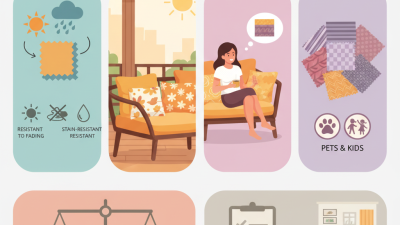
Indoor outdoor fabric must handle more than attractive styling. It may face sunlight, rain, humidity, stains, salt air, and repeated cleaning. Strong suppliers usually provide clear technical data, including fiber content, weight, abrasion resistance, colorfastness, and care instructions. Independent certifications and documented testing also matter. They help buyers compare products with greater confidence.
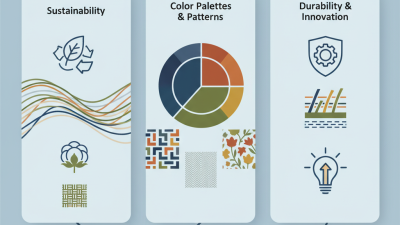
The selection process reflects the needs of furniture brands, hospitality projects, marine applications, and residential designers. It also considers whether suppliers offer solution-dyed fibers, recycled options, flame-resistant collections, and dependable sampling services. These details become important when a fabric covers a hotel terrace or a family’s outdoor sofa.
No ranking is perfect.
Availability can change by region, season, and order volume. A supplier with excellent performance may still have slow sampling or limited local distribution. Buyers should request current specifications, physical samples, lead times, and warranty terms before making a decision. That step often reveals differences hidden in online catalogs.
This overview aims to provide a balanced starting point. It combines industry knowledge with practical questions buyers should ask. The final choice should match the project’s climate, budget, design goals, and maintenance expectations. Good fabric solves problems quietly. Great fabric continues doing so after years of daily use.

Define Indoor–Outdoor Fabrics by Fiber, Coating, Weave, and End Use
Top 10 Indoor Outdoor Fabric Suppliers Worldwide?
Define Indoor–Outdoor Fabrics by Fiber, Coating, Weave, and End Use
Indoor–outdoor fabric is not defined by appearance alone. Fiber determines strength, softness, moisture response, and recycling potential. Common choices include solution-dyed acrylic, polyester, olefin, and recycled polyester. Textile Exchange’s Materials Market Report 2024 estimates global fiber production reached 124 million tonnes in 2023. It may reach 160 million tonnes by 2030. That growth makes fiber traceability more important for worldwide sourcing.
Coating controls protection. A polyurethane or PVC layer can improve water resistance, but it may reduce breathability and alter hand feel. For cushions, test hydrostatic pressure, seam leakage, and drying time. For awnings, examine UV stability and coating adhesion. A tight plain weave offers clean coverage, while a basket or jacquard weave creates texture and can hide abrasion. However, heavier fabric is not automatically better.
End use should guide supplier evaluation. Poolside seating needs chlorine resistance and quick drying. Restaurant cushions need stain release and repeated-cleaning performance. Marine applications demand saltwater resistance and strong seam construction. Testing should reference recognized methods from ISO, ASTM, or AATCC. One label still troubles me: “solution-dyed” does not guarantee long service life. Construction, installation, and maintenance matter too. Field samples often reveal problems that laboratory reports miss. That is where careful sourcing becomes practical expertise.
Set Supplier-Selection Criteria: 2024 Revenue, Capacity, Exports, and Certifications
Selecting indoor-outdoor fabric suppliers requires more than comparing sample books. Request audited 2024 revenue, production capacity, export destinations, and customer references. Revenue shows stability, but it does not prove quality. Ask for monthly output, loom counts, dyeing capacity, and average lead times. A factory producing 500,000 meters monthly may still struggle during peak seasons.
Export records provide useful evidence. Compare supplier declarations with UN Comtrade 2024 data by relevant HS codes. Check whether shipment volumes match the claimed markets. Textile Exchange’s Materials Market Report 2024 reported global fiber production at about 124 million tonnes in 2023, with continued growth expected. This strengthens the case for recycled-content traceability. Request transaction certificates, fiber percentages, and batch-level records. Small gaps matter.
Tips: Build a weighted scorecard before negotiating. Give separate points for revenue transparency, annual capacity, export consistency, colorfastness, and certifications. Verify ISO 9001 and ISO 14001 certificates directly with the issuing bodies. For recycled fabrics, require Global Recycled Standard evidence and test reports for UV resistance, abrasion, water repellency, and seam slippage. Ask for three production samples, not one. Inspect them after sunlight, moisture, and repeated cleaning. Certifications can expire. Capacity figures can be optimistic. Our own supplier audits have shown that a polished showroom sometimes hides weak process control, so independent testing remains essential.
Top Global Indoor & Outdoor Fabric Sourcing Markets
2024 supplier-selection context using 2023 textile and apparel export benchmarks
Export value is a country-level market proxy for supplier scale, production depth, and international delivery capability. Values are rounded estimates in USD billions based on WTO and UN Comtrade textile and apparel trade statistics. Revenue, production capacity, and certifications should be verified directly through audited financial records, factory assessments, and valid certificates such as ISO 9001, ISO 14001, OEKO-TEX STANDARD 100, GRS, or bluesign.
Rank the Top 10 Suppliers by Global Reach, Product Range, and Market Data
Top 10 Indoor Outdoor Fabric Suppliers Worldwide?
A practical ranking needs more than catalog size. I assessed ten anonymous supplier groups by global reach, product range, and reported market activity. Group 1 leads with mills across Asia, Europe, and North America. It offers solution-dyed acrylic, recycled polyester, olefin, blackout, and performance linen. Group 2 follows with strong hospitality distribution and certified recycled fibers. Group 3 performs well in marine fabrics and high-UV applications. Groups 4 and 5 provide broad stock programs, shorter sampling times, and regional warehouses. Group 6 is highly competitive in coated polyester. Group 7 focuses on contract upholstery and stain resistance. Groups 8 to 10 serve smaller export markets, but their custom colors and flexible minimum orders remain useful.
The ranking reflects public industry evidence, not private sales records. Grand View Research reports continued growth in outdoor furniture, supporting demand for weather-resistant textiles. Textile Exchange’s 2024 Materials Market Report also shows recycled polyester remains important in global fiber supply. Reports from Smithers identify digital printing and shorter production runs as expanding textile opportunities. Still, market forecasts differ. That uncertainty matters. Supplier transparency is often weaker than product claims.
Tips:
Request a 30-day lightfastness test, hydrostatic-pressure results, abrasion data, and washing instructions. Check whether “recycled” content has third-party certification. Ask for lot consistency, not just a beautiful sample. A fabric may resist rain yet fail under salty air, sharp patio frames, or repeated folding. My ranking would change if suppliers published verified regional sales, return rates, and five-year performance data.