What Is Chair Upholstery and How Does It Work?
Chair upholstery is the skilled process of rebuilding and covering a chair’s seat, back, arms, or frame. It combines practical repair with visual design. The work may involve removing old fabric, checking the frame, replacing webbing, shaping foam, adding batting, and fitting new cloth. Each layer affects comfort and durability. A loose spring can create a sinking seat. Poorly aligned fabric can make an otherwise beautiful chair look careless.
Upholstery educator and author Amanda Brown describes the craft this way: “Upholstery is not just about making something look good; it is about making it feel good, too.” That principle explains why professional chair upholstery begins beneath the visible fabric. An experienced upholsterer examines joints, staples, padding, and fabric tension before choosing a finish. Natural fabrics may offer warmth, while performance textiles can resist daily stains and abrasion. The right material depends on use, lighting, pets, and cleaning habits.
The process is rarely perfectly tidy. It can reveal cracked wood, tired foam, or repairs that were hidden for decades. That discovery may change the budget and the original plan. Still, careful documentation helps homeowners make informed decisions. Measurements, photographs, fabric samples, and clear repair notes improve reliability. Chair upholstery is not simply decoration. It is a method of extending furniture’s useful life while preserving comfort, structure, and character. Sometimes, the best result is not a flawless new appearance. It is a chair that feels honest, stable, and ready for many more years.
Definition and Purpose of Chair Upholstery
What Is Chair Upholstery and How Does It Work?
Chair upholstery is the process of covering a chair with fabric, padding, and supportive materials. It can also involve repairing the frame, springs, webbing, or inner lining. Upholstery is more than a decorative surface. It affects comfort, posture, durability, and the chair’s overall condition.
The work usually begins with a careful inspection. An upholsterer checks loose joints, damaged wood, worn padding, and uneven support. Old fabric may be removed before each layer is assessed. The foam or filling is then measured, shaped, and fitted to the seat and back. Fabric is stretched over the padding and secured beneath the chair with controlled tension. Too much tension can distort the pattern. Too little can create wrinkles.
Its main purpose is to restore useful comfort while protecting the chair from daily wear. A dining chair may need firm support, while a reading chair may require softer cushioning. Fabric choice also matters. Breathable materials can feel cooler, but delicate textiles may wear quickly in busy rooms. Leather-like surfaces are easy to wipe, yet they can feel cold at first.
A common mistake is choosing fabric before testing the padding. A beautiful cover cannot correct poor support. In practice, even small measurement errors can affect the finished shape. The best upholstery decisions balance appearance, function, maintenance, and the chair’s original structure. Sometimes the ideal result is not perfectly smooth. A handmade finish may retain slight irregularities.
Main Materials and Tools Used in Chair Upholstery
Chair upholstery is the process of replacing or repairing a chair’s fabric, padding, and support layers. It can improve comfort, appearance, and structural condition. The main materials include upholstery fabric, foam, batting, webbing, and replacement dust cloth. Fabric should resist abrasion and match the chair’s daily use. Dense foam supports the seat, while softer foam creates a more relaxed feel. Batting smooths hard edges and prevents the fabric from looking uneven.
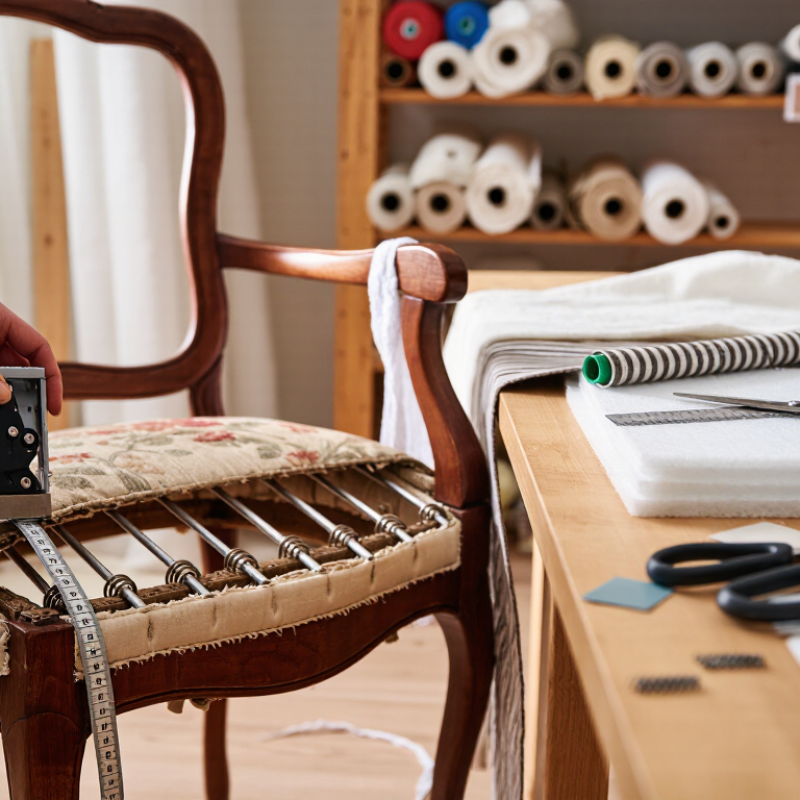
Several hand tools make the work accurate. An upholstery staple remover lifts old staples without damaging the frame. Sharp fabric scissors create cleaner cuts than ordinary household scissors. A pneumatic or manual staple gun secures the new cover. Tack strips, a hammer, pliers, and an awl may also be useful. A measuring tape helps prevent costly material shortages. Experienced upholsterers often photograph each layer before removal. This small record shows how the original fabric was folded and attached.
Good upholstery depends on tension, not force. Pulling fabric too tightly can distort patterns or compress the foam. Loose fabric creates wrinkles around the corners. I usually test the cover with temporary staples before fixing it permanently. Even careful work can reveal a mistake after the chair is turned upright. That is normal, but it requires patience and sometimes partial removal. Frames with cracks or weakened joints should be repaired before new upholstery hides the problem.
Step-by-Step Chair Upholstery Process
What Is Chair Upholstery and How Does It Work?
Step-by-Step Chair Upholstery Process
Chair upholstery means replacing or repairing the fabric, padding, and support layers on a chair. A careful process improves comfort, appearance, and durability. The work begins with an inspection. Check the frame, joints, springs, and old fabric for damage. A weak frame should be repaired before new material is added.
Remove the existing upholstery slowly. Use a staple remover and keep one fabric section as a pattern. Mark the front, back, and side pieces. This small step prevents costly cutting mistakes. Measure the seat twice, then add extra fabric for wrapping and fastening. Choose upholstery-grade fabric with suitable strength and easy maintenance.
After removing the old padding, examine the webbing or springs. Replace loose webbing and secure any broken support. Cut new foam with an electric knife or sharp blade. A thin layer of batting can soften hard edges. Place the fabric evenly over the cushion. Pull from the center outward, alternating sides to control tension.
Do not stretch one corner too tightly. It can create wrinkles elsewhere. Fasten the fabric underneath with evenly spaced staples. Fold corners neatly, then trim excess material. I once tightened the front edge too early, and the pattern shifted slightly. That mistake taught me to check alignment before every permanent staple. Finish by inspecting seams, comfort, and exposed edges under normal use.
Care, Repair, and Replacement of Upholstered Chairs
What Is Chair Upholstery and How Does It Work?
Chair upholstery covers a frame with padding, fabric, leather, or another durable material. Beneath the surface, foam, batting, webbing, and springs support the sitter. During reupholstery, a professional removes old staples and examines each layer. Loose joints, broken webbing, and compressed foam should be repaired before new fabric is fitted. Careful measuring matters because a few centimeters can distort the pattern.
Regular care extends an upholstered chair’s useful life. Vacuum seams and crevices gently every few weeks. Blot spills immediately with a clean, dry cloth. Avoid soaking the padding, since trapped moisture may create odors or weaken the fabric. Follow the care label and test any cleaning solution on a hidden area. I have learned that cleaning too aggressively can cause more damage than a small stain.
Tips:
Photograph the chair before removing its fabric. Mark each panel and staple location. For repairs, replace damaged foam instead of adding layers blindly. A chair may look fine while its support has already failed. Replacement is sensible when the frame is unstable, the padding smells persistently, or repairs approach the chair’s original cost. However, a worn surface does not always mean the chair is finished. Sometimes new webbing and fresh fabric restore its comfort. My own first repair was not perfectly aligned, but it showed why patience matters. A skilled upholsterer can assess hidden damage before work begins.