Choosing a tulle fabric supplier in China involves more than comparing prices or browsing product photos. Global buyers need to understand mesh structure, fiber content, width, color consistency, and finishing options before requesting a quotation. A soft bridal tulle may suit veils and overlays, while firmer netting can work better for costumes, decorations, or structured garments. The difference is easy to miss on a screen. Swatches help.
This guide introduces ten Chinese suppliers for buyers exploring different production needs and order sizes. It offers a starting point, not a guarantee of quality or suitability. Supplier capabilities can change, and product descriptions do not always reveal how fabric performs after cutting, sewing, or washing. Ask for current specifications, sample availability, minimum order quantities, lead times, and clear pricing terms. Where certifications or test reports are relevant, request documents and confirm that they apply to the exact material being purchased.
A careful comparison should consider communication, customization, quality-control practices, and export experience alongside cost. Small details matter. A few grams per square meter can change drape; a slight shade difference can stand out across a full production run. Buyers should test samples under their own conditions and record agreed specifications before placing larger orders. This takes time. It may also expose gaps in a supplier’s offering, which is useful to know early. The ten profiles that follow are intended to help readers ask better questions and build a shortlist grounded in their actual requirements.
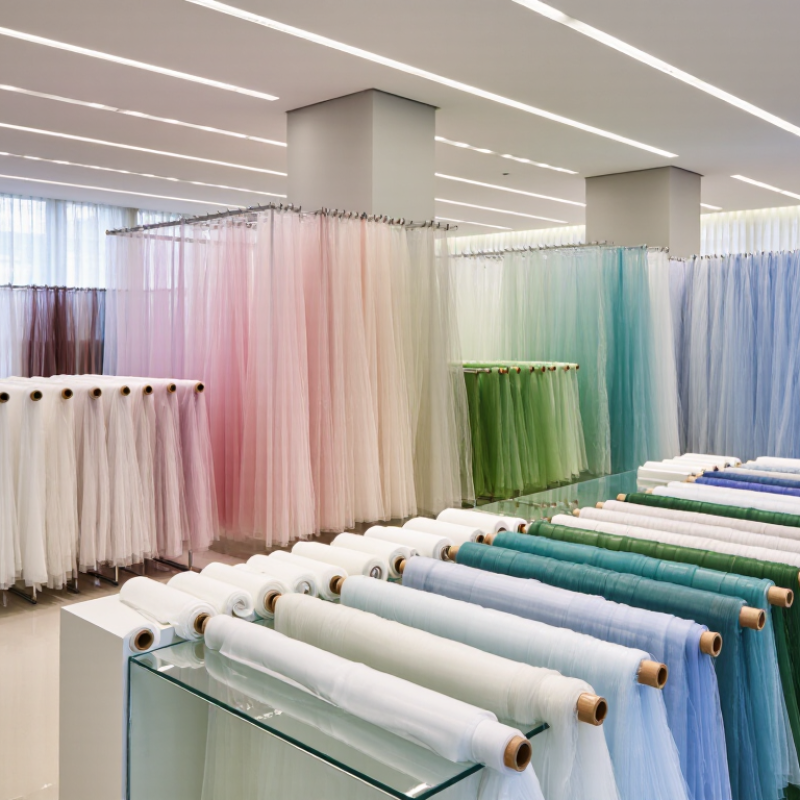
Tulle is a lightweight fabric with a fine, open net structure. It is commonly made from nylon or polyester, while silk versions are also available. The mesh lets air pass through and adds volume without much weight. Tulle appears in wedding veils, layered skirts, ballet costumes, eveningwear, and decorative overlays. Its look can be delicate. Its feel varies widely.
The mesh size and yarn stiffness affect how tulle drapes. Soft tulle falls gently around a skirt, while stiffer varieties hold fuller shapes. Some finishes feel crisp or scratchy against skin, so appearance alone can be misleading. Tulle may also snag on jewelry, rough nails, or sharp edges. For a large garment order, a small sample is worth checking; color and softness can look different under indoor lighting. One detail buyers may overlook is how the fabric behaves after gathering or washing.
Tips: Ask suppliers for fabric width, weight, mesh details, and care guidance. Compare swatches in the light where the finished item will be used. Test a small section first. It saves guesswork.
Choosing a Chinese tulle supplier requires checking production consistency, not just comparing quotations. Request specifications for fiber content, yarn denier, mesh count, usable width, and fabric weight. These details affect drape, opacity, and cutting yield. Textile Exchange’s Materials Market Report 2024 estimated global fiber production at 124 million tonnes in 2023, with polyester making up 57%. This is useful sourcing context, not proof that a particular tulle is durable or well made.
Ask for samples from current production and compare them under the same lighting. Check for uneven mesh, snags, edge curling, and shade differences between rolls. Samples matter. But they are imperfect evidence. Specify acceptable tolerances in the purchase agreement, then request inspection records and test reports tied to the actual production lot. Relevant checks may include dimensional stability and colorfastness, using recognized test methods such as ISO 5077 and ISO 105-C06.
Reliable suppliers should explain their dyeing, finishing, and inspection steps clearly. Request valid, scope-matched documentation for any claimed management or product certification; a certificate alone does not establish fabric performance. Clarify minimum order quantities, lead times, packing, and how defects are handled. Ask for a production schedule with dates, not vague assurances. One detail buyers sometimes overlook: confirm whether quoted width means usable width after finishing. It can affect yield—and the final cost.
China’s tulle supply base includes varied production capabilities rather than one uniform supplier type. These ten profiles describe practical supplier categories, not a verified company ranking.
Warp-knit mills can offer stable mesh structures for apparel linings. Nylon-focused producers suit buyers seeking lightweight, resilient netting. Polyester specialists often provide broad color options and repeatable lots. Recycled-polyester suppliers may support material-traceability requests, but buyers should verify documentation. Bridal-fabric makers typically emphasize soft hand feel and fine, even holes.
Stiffer-net producers serve decorative and structured applications. Stretch-tulle mills work with elastane blends, so recovery tests matter. Embroidery-ready suppliers need consistent mesh spacing to reduce needle issues. Integrated dyeing operations can simplify shade control, though lead times still vary. Export-oriented trading and manufacturing groups may coordinate sampling, inspection, and shipping.
Details matter.
Textile Exchange’s Materials Market Report 2024 estimates that global fiber production reached 124 million tonnes in 2023, with polyester accounting for 57 percent. This context helps explain the scale of synthetic-fiber sourcing, but it does not establish any supplier’s quality.
Request current specifications, sample swatches, test results, minimum order quantities, and written lead times. A subtle inconsistency between a sample and bulk production can still happen; confirm tolerances before placing an order.
China’s tulle fabric suppliers vary in the range of materials they offer. Some focus on lightweight nylon mesh, while others carry polyester tulle in softer or stiffer finishes. Compare available widths, colors, roll lengths, and fabric weights—not just catalog photos. These details affect drape, cutting waste, and how the fabric performs under stage lighting or in a layered garment. Ask for specifications in writing. A close-up sample helps, too.
Customization can include color matching, coated finishes, different stiffness levels, and packaging by roll or cut length. Confirm sample fees, minimum order quantities, and whether repeat batches can match the approved shade. Dye lots may vary slightly; this is easy to overlook when a small swatch looks consistent. Ask twice. A sample approval should identify the color reference and finish, not rely on a vague description.
Export capability is more than offering international shipping. Check how the supplier handles packing, lead-time estimates, shipping documents, and updates when production slips. Request a sample roll or pre-shipment photos when quality is critical, and inspect mesh consistency and edge damage on arrival. A polished sample does not guarantee every production roll will be identical. Build inspection time into the schedule, especially when several colors or custom finishes are involved.
A dependable tulle supplier should prove where the fabric is made, not just send a polished catalogue. Ask for the factory address, business registration, production capacity, and details of any subcontracted processes. Textile Exchange’s Materials Market Report 2024 estimates that global fibre production reached 124 million tonnes in 2023. That scale makes traceability worth checking, even for a lightweight fabric. Paper is not proof. Compare the supplier’s stated mill with sample labels, invoices, and a live production-floor walkthrough. Request a sample card showing fibre content, width, weight, mesh structure, and finishing treatment. Keep the approved sample sealed and dated.
Before placing a bulk order, agree on measurable tolerances for shade, width, weight, and mesh consistency. Test samples for colourfastness, dimensional change, and seam performance through a qualified laboratory. Textile Exchange’s report also projects global fibre production could reach 160 million tonnes by 2030, adding pressure to verify material claims and batch records. Ask for evidence tied to the actual production lot, rather than a generic certificate. Set inspection dates, payment milestones, packaging requirements, and a remedy for failed checks in writing. A spreadsheet can look reassuring while missing a key detail. Recheck the first bulk roll against the approved sample; small differences can change how tulle drapes under light.