China Top 10 Fabric Warehouse Suppliers?
China’s fabric warehouse sector supports one of the world’s largest textile supply networks. The World Trade Organization identifies China as a leading exporter of textiles and clothing, while UN Comtrade data shows strong international demand for Chinese-made fabrics. These figures explain the market’s scale, but they do not prove every supplier is reliable. Warehouse quality still depends on stock accuracy, fabric inspection, storage conditions, and export experience.
This guide introduces ten notable China fabric warehouse suppliers for buyers comparing product range, minimum order quantities, delivery speed, and customization services. The International Textile Manufacturers Federation regularly highlights pressure on textile companies to improve efficiency, flexibility, and supply-chain visibility. Those priorities matter when a warehouse holds thousands of rolls, from cotton and linen to polyester, denim, and technical textiles. A well-managed facility should show clear batch labels, moisture protection, sample approval records, and responsive communication. Small details matter.
Not every large warehouse offers the best buying experience. Some suppliers publish broad catalogs but provide limited real-time inventory information. Others may respond quickly but lack consistent inspection procedures. This ranking should therefore be treated as a practical starting point, not a final verdict. Buyer feedback, factory audits, test reports, and shipment records deserve equal attention. The ideal partner combines dependable fabric warehouse operations with transparent pricing and realistic lead times. Mistakes can happen, even with experienced suppliers. Careful verification remains essential.
What Defines a Leading Fabric Warehouse Supplier in China?
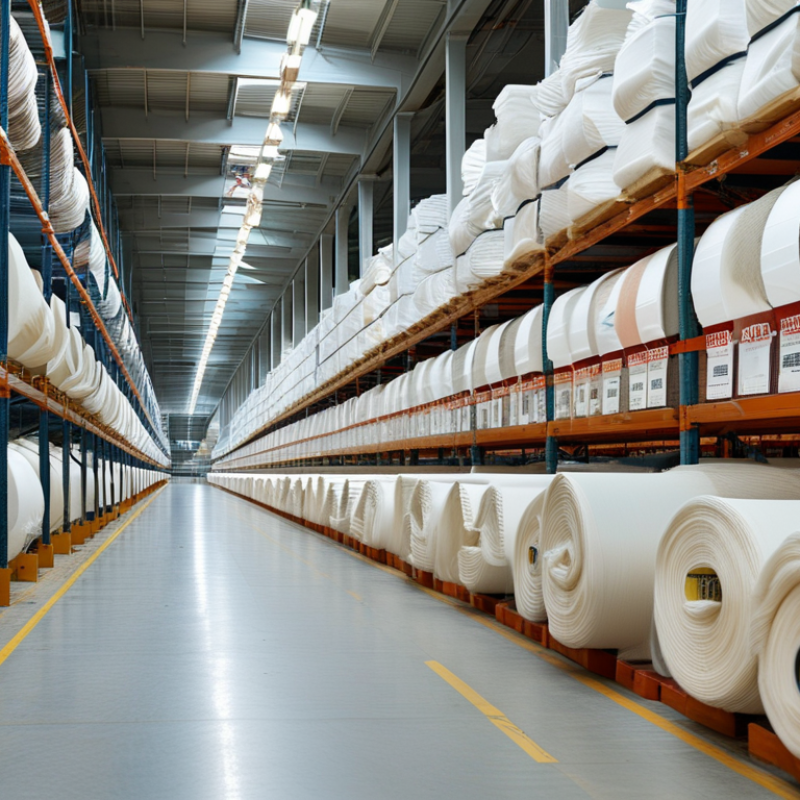
A leading fabric warehouse supplier in China is defined by control, not by a large catalogue. The warehouse should show live inventory, fabric width, weight, composition, dye-lot details, and storage dates. A buyer should receive a physical swatch before approving bulk purchasing. According to China Customs data, China’s textile and apparel exports exceeded US$290 billion in 2023. That scale creates choice, but also makes verification essential.
Reliable suppliers use barcode tracking, moisture control, and batch-level records. A roll stored above a damp concrete floor can develop hidden defects. It may look acceptable under showroom lights. Professional warehouses should provide inspection reports based on measurable standards, including color fastness, shrinkage, pilling, and tensile strength. ISO 9001 principles support documented quality procedures, while OECD due-diligence guidance encourages traceable and responsible supply chains. These references do not replace an on-site audit.
Delivery performance also matters. The supplier should disclose available stock, replenishment time, minimum order quantity, and realistic loading dates. According to the UNCTAD Review of Maritime Transport 2023, global logistics remained exposed to congestion and schedule disruption. A strong warehouse therefore keeps alternative transport plans and communicates delays early. No warehouse is perfect. Some inventory records can still lag behind physical stock. Buyers should test counting accuracy, inspect random rolls, and review several recent orders before selecting a long-term partner.
China Top 10 Fabric Warehouse Suppliers? - What Defines a Leading Fabric Warehouse Supplier in China?
| Rank | Anonymized Supplier Profile | Primary Warehouse Hub | Main Fabric Categories | Estimated Stock Range | Typical MOQ | Order Processing | Warehouse Strength | Quality & Compliance Support |
|---|---|---|---|---|---|---|---|---|
| 1 | Large Integrated Stock Supplier | Keqiao, Zhejiang | Polyester, nylon, cotton blends, functional fabrics | 500,000–2,000,000 meters | 50–300 meters per color | 1–3 working days for stocked goods | Broad inventory and multi-category consolidation | Color cards, fabric inspection, testing coordination |
| 2 | Synthetic Fabric Specialist | Shengze, Jiangsu | Polyester filament, recycled polyester, satin, chiffon | 300,000–1,500,000 meters | 100–500 meters per design | 2–5 working days | Strong greige-to-finished-fabric supply coordination | Weight, width, colorfastness and composition checks |
| 3 | Home Textile Warehouse Supplier | Nantong, Jiangsu | Curtain, upholstery, bedding and jacquard fabrics | 200,000–900,000 meters | 100–500 meters per pattern | 3–7 working days | Roll storage and coordinated multi-item dispatch | Abrasion, lightfastness and dimensional-stability testing |
| 4 | Apparel Fabric Stockist | Guangzhou, Guangdong | Cotton, rayon, linen blends, denim and jersey | 150,000–800,000 meters | 30–200 meters per color | 1–4 working days | Fast sampling and small-batch replenishment | Shrinkage, colorfastness and fiber-content documentation |
| 5 | Stretch and Performance Fabric Supplier | Foshan, Guangdong | Spandex blends, activewear, swimwear and sports mesh | 100,000–600,000 meters | 100–300 meters per color | 3–7 working days | Technical fabric handling and sample roll availability | Stretch recovery, pilling and colorfastness evaluation |
| 6 | Silk and Premium Natural Fabric Supplier | Suzhou, Jiangsu | Silk, silk blends, wool blends and premium cotton | 50,000–300,000 meters | 30–100 meters per color | 5–10 working days | Controlled storage and high-touch sample service | Fiber verification, color approval and hand-feel assessment |
| 7 | Knitted Fabric Warehouse Supplier | Zhongshan, Guangdong | Single jersey, rib, interlock, fleece and French terry | 120,000–700,000 kilograms | 50–300 kilograms per color | 3–8 working days | Batch tracking and tubular-fabric handling | GSM, width, spirality and shrinkage checks |
| 8 | Functional Outdoor Fabric Supplier | Wujiang, Jiangsu | Water-repellent, coated, laminated and outdoor fabrics | 80,000–500,000 meters | 100–500 meters per specification | 5–12 working days | Specialized finishing and technical order control | Hydrostatic pressure, spray rating and coating verification |
| 9 | Home Furnishing and Upholstery Stockist | Haining, Zhejiang | Velvet, chenille, faux leather and upholstery textiles | 100,000–650,000 meters | 100–500 meters per color | 3–7 working days | Large-roll storage and repeat-order continuity | Abrasion, seam-slippage and colorfastness support |
| 10 | Flexible Small-Batch Export Supplier | Yiwu, Zhejiang | Mixed apparel, craft, lining and promotional fabrics | 30,000–250,000 meters | 20–100 meters per color | 1–5 working days | Low-volume consolidation and export packing | Basic inspection, sample approval and packing documentation |
Note: The profiles above are anonymized market-reference categories based on major textile and logistics hubs in China. Stock ranges, minimum order quantities and processing times are indicative operational benchmarks and should be confirmed directly for each purchasing project.
Related Posts
-
10 Essential Tips for Finding the Best Fabric Warehouse Near You?
-
2026 Best Blue Upholstery Fabric Options for Your Home?
-
What Is the Best China Velvet Upholstery Fabric Supplier?
-
2026 Best Sofa Upholstery Options for Your Home Decor Needs?
-
Top 10 Fabric Outlets in China for Global Buyers?
-
Top 10 Bulk Fabric Types for Your Next Sewing Project: A Comprehensive Guide